




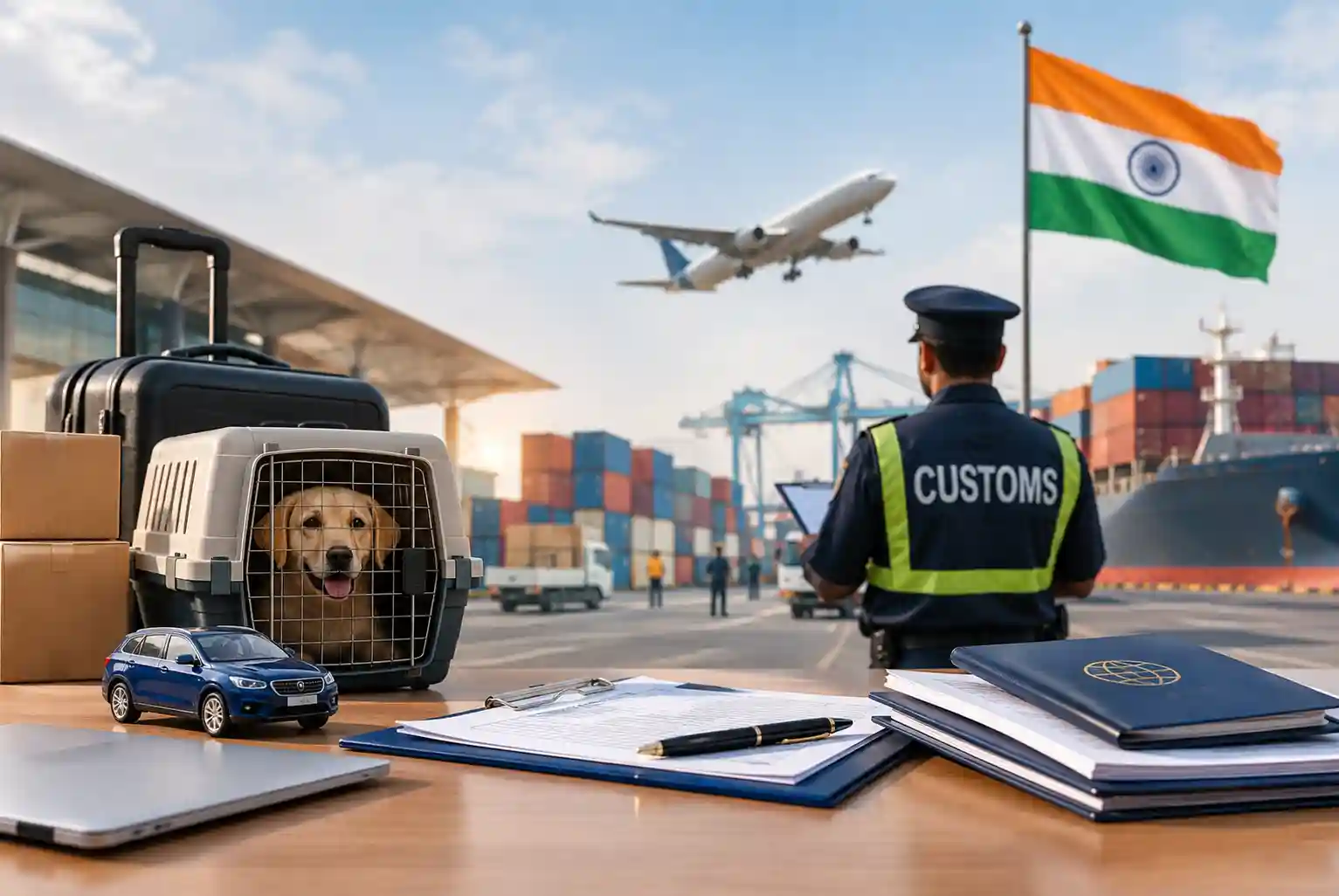
Moving your life and belongings to a new country can feel like a huge mountain to climb. You might worry about your items getting lost, facing hidden fees, or dealing with piles of confusing paperwork. If you are moving to India, understanding the rules at the border is the most important part of your trip.
This guide explains the customs clearance process in India in very simple terms. We will cover the important steps and the documents you may need. Whether you are bringing household goods, a family pet, or a vehicle, this article will help you understand the process and prepare for your move.
What Is the Customs Clearance Process in India?
The customs clearance process in India is the official procedure through which the government checks goods entering the country. Customs officers review documents, verify whether goods comply with applicable regulations, and determine whether any customs duty or other taxes are payable.
Your goods may arrive at a seaport, an airport, or an inland facility known as an Inland Container Depot (ICD). For example, shipments destined for the Delhi NCR region may pass through facilities such as ICD Tughlakabad or ICD Garhi Harsaru, depending on the shipment and logistics arrangements.
If you need assistance planning an international move, explore the international relocation services offered by PM Relocations.
Important Documents You Need
Preparing the correct paperwork helps reduce the risk of delays during customs clearance. Depending on your shipment, the required documents may include identity documents, shipping records, and a detailed inventory of your belongings. Customs procedures and document requirements can vary according to the type of shipment.
The following table lists common documents that may be required:
|
Document Name |
What It Is and Why You Need It |
|
Passport and Visa |
Proves your identity and shows your legal right to enter and live in India. |
|
Bill of Lading / Airway Bill |
The official receipt from the shipping company that carried your goods. |
|
Commercial Invoice & Packing List |
A detailed list of every item in your boxes and how much each item is worth. |
|
Baggage Declaration Form (CBD-I) |
A form used to declare items you brought with you on your flight. |
|
Import Export Code (IEC) |
A code needed if you are importing items for commercial business reasons. |
For official customs information and applicable procedures, visit the ICEGATE website.
Steps for Clearing Your Goods
The exact customs clearance procedure depends on whether you are importing personal effects, accompanied baggage, commercial cargo, pets, or a vehicle. The following steps provide a general overview of the process.
Step 1: Prepare Your Documents in Advance
Gather your identification documents, shipment details, inventory, and any permits or declarations that apply to your goods. For passenger baggage, check the current declaration procedure and eligibility requirements before travelling.
You can consult the official ATITHI portal for applicable passenger declaration information.
Step 2: Submit the Bill of Entry, Where Required
For shipments that require a Bill of Entry, the importer or authorised customs representative submits the applicable declaration through the prescribed customs system. The declaration provides details about the goods, their origin, and other information required for assessment.
Step 3: Document Verification
Customs authorities review the submitted documents and declarations. They may request additional information or clarification if the shipment details are incomplete or inconsistent.
Step 4: Assessment and Payment of Customs Duty
Customs authorities assess the shipment under the applicable rules. If customs duty or other charges are payable, these must be settled through the authorised process before release, where required.
Step 5: Examination and Release
Customs officers may examine the shipment to verify its contents and compliance with regulations. Once the necessary requirements are fulfilled, the goods may be released for onward transportation and delivery.
Professional moving and relocation services can help coordinate shipment handling and delivery arrangements. Customs decisions and approvals remain subject to the relevant authorities.
Baggage Rules and Transfer of Residence in India
Passenger baggage allowances and Transfer of Residence benefits are governed by the applicable Indian customs rules. Eligibility, duty-free limits, permitted items, and documentation requirements depend on the traveller's circumstances and the current regulations.
Before travelling or shipping household goods to India, verify the current rules through official government sources, including the Central Board of Indirect Taxes and Customs (CBIC).
Duty-Free Allowances
Duty-free baggage allowances depend on factors such as the traveller's category, mode of arrival, and the type of goods being carried. Certain goods may be subject to restrictions or separate duty requirements.
Do not assume that every newly purchased item qualifies for a duty-free allowance. Check the applicable rules before packing or travelling.
Jewellery Allowances
Customs treatment of jewellery brought into India depends on the applicable baggage rules and the traveller's eligibility. Verify the permitted quantities, conditions, and declaration requirements with official customs guidance before travelling with valuable jewellery.
Transfer of Residence Benefits
People returning to or relocating to India may qualify for specific concessions on household effects if they meet the applicable Transfer of Residence conditions.
Eligibility can depend on factors such as the period spent abroad, the nature of the goods, and other conditions prescribed by customs regulations. Some goods may be excluded from concessions or may attract duty.
Check the current rules with CBIC or a qualified customs professional before shipping your household belongings.
Special Relocations: Pets and Vehicles
Moving pets or vehicles internationally requires additional preparation. Both may be subject to specific import conditions, permits, inspections, and other regulatory requirements.
Pet Relocation
Bringing a pet into India may require veterinary records, vaccination documentation, identification such as a microchip, and approvals or certificates from the relevant authorities. The requirements can vary according to the circumstances of the import.
Before travelling with a cat or dog, confirm the latest requirements with the relevant animal quarantine authorities and your airline.
For help planning a pet move, visit PM Relocations to explore relocation assistance and discuss the services available for your requirements.
Vehicle Transportation
Importing a vehicle into India can involve detailed documentation, customs duty, and compliance with applicable vehicle regulations. Requirements may depend on the vehicle's specifications, age, origin, intended use, and import category.
Before shipping a car, verify the current import policy and applicable safety, emissions, registration, and customs requirements with the relevant authorities. Do not arrange shipment until you have confirmed that the vehicle is eligible for import.
Common Challenges and Hidden Costs
Mistakes during the customs clearance process in India can lead to delays and additional costs. One common problem is failing to prepare the required documents before the shipment arrives.
Demurrage and Detention Charges
Demurrage and detention are shipping-related charges that may apply when containers are not handled or returned within the agreed free time. The exact terms, rates, and free periods depend on the shipping line, terminal, and applicable contract.
To reduce the risk of unexpected charges, coordinate shipment documentation, customs clearance, transport arrangements, and container return requirements in advance.
Restricted and Prohibited Items
Some goods are prohibited or restricted under Indian law. Other items may require licences, permits, declarations, or additional approvals before import.
Check the current import requirements before packing restricted goods, electronic equipment, drones, or other items that may be subject to special rules.
Why Professional Relocation Services Can Help
Moving internationally involves careful planning, transport coordination, documentation, and delivery arrangements. Professional international relocation services can help organise the practical aspects of moving your household belongings.
Depending on the services agreed upon, relocation professionals may assist with packing, loading, transportation, shipment coordination, delivery, and insurance-related arrangements.
Benefits of Professional Moving Services
|
Moving Service |
How It Helps You |
|
Professional packing |
Experts use strong, high-quality boxes and wrapping to keep your items safe during long trips across the ocean. |
|
Documentation |
Professionals know exactly which forms to file. They handle the customs clearance process in india for you, avoiding costly mistakes. |
|
Door-to-door service |
The team picks up items from your old house and places them exactly where you want them in your new house. |
|
Tracking |
Modern logistics companies use GPS so you can always see exactly where your shipping container is located. |
|
Insurance assistance |
Movers help you buy the right insurance plan. This protects your money in case a rare accident happens during storage or travel. |
Using professional relocation services can help you coordinate the different stages of your move. However, customs clearance remains subject to applicable regulations and approval by the relevant authorities.
Frequently Asked Questions
1. How long does the customs clearance process in India take?
The time required depends on the type of shipment, document completeness, inspection requirements, applicable approvals, and customs assessment. Missing documents or additional checks may cause delays.
2. What is the difference between demurrage and detention charges?
Demurrage generally relates to keeping a container at a terminal beyond the permitted free time. Detention generally relates to keeping a shipping line's container outside the terminal beyond the permitted period before returning it. Exact terms depend on the applicable shipping agreement.
3. Are household goods always duty-free when moving to India?
No. The customs treatment of household goods depends on the applicable baggage rules, eligibility conditions, type of goods, and import circumstances. Check the current rules before shipping.
4. Can I declare my baggage before arriving in India?
Advance declarations may be available for eligible passengers through the applicable customs process. Check the official ATITHI portal and current guidance to confirm the procedure for your journey.
5. What documents are required to bring a pet to India?
Requirements may include vaccination records, veterinary documents, identification, and approvals from the relevant authorities. Confirm the current requirements before booking your pet's travel.
6. Can I import a car into India?
Vehicle imports are subject to eligibility conditions and applicable customs, safety, emissions, and registration requirements. Confirm the rules for your specific vehicle with the relevant authorities before shipping.
Conclusion
Understanding the customs clearance process in India can help you prepare for an international move, organise your documents, and reduce the risk of avoidable delays. Check the applicable customs requirements before shipping your belongings, declare goods accurately, and plan your transportation arrangements in advance.
If you are planning an international household move, visit PM Relocations to learn more about available relocation services and discuss your moving requirements.



 Post Feedback
 Gallery
 Awards & Media
 FAQ
 CSR & Sustainability
.svg)