






LARGE AQUARIUM RELOCATION: WHAT YOU NEED TO KNOW BEFORE MOVING DAY
Introduction
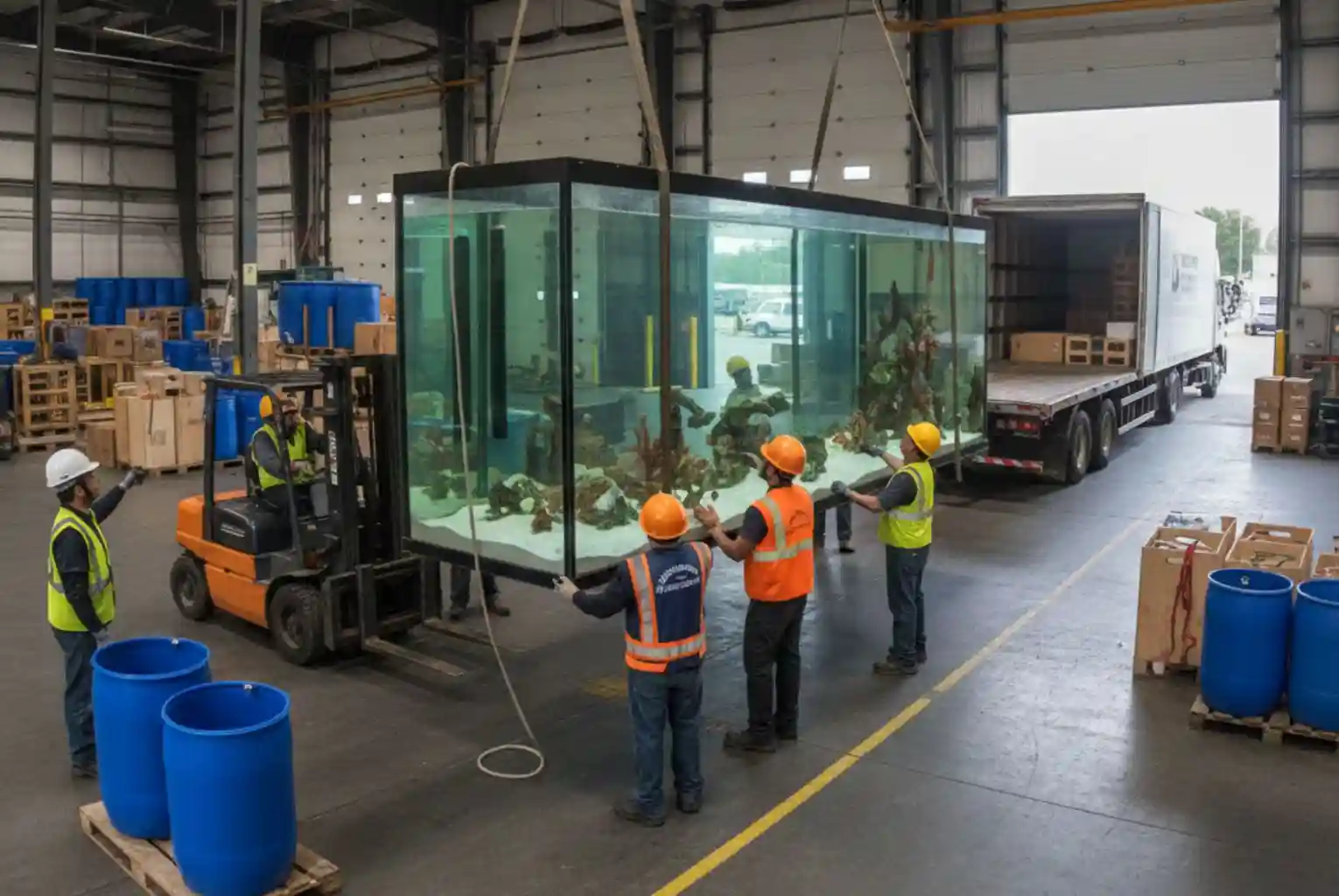
Moving a massive home aquarium is far more complex than shifting furniture or home décor. Large aquarium relocation involves preserving an entire aquatic ecosystem—fish, plants, corals, filtration bacteria, and equipment. Even a small mistake during the move can disrupt this delicate balance and cause stress or harm to your aquatic pets. That’s why understanding the right steps before moving day is essential for ensuring your fish remain healthy, and your tank remains safe.
Proper planning begins days before the actual move. You must evaluate the size of the aquarium, the species inside it, the type of filtration you use, and the stability of the structure. Bigger tanks cannot be partially moved; they must be fully emptied to avoid pressure damage. Saving some of the existing tank water is crucial because this helps maintain good bacterial balance during re-setup. Reducing feeding for a day or two before the move also helps keep the water cleaner for the fish containers. The key is to simplify the system so that everything transitions smoothly to its new location.
Why Professional Expertise Matters
When it comes to heavy, fragile, and expensive aquariums, expert handling becomes essential. Professional teams know how to dismantle, pack, transport, and reassemble aquariums without causing stress to fish or damaging the tank. This is where aquarium moving services offer tremendous value. Unlike regular movers, these specialists understand water chemistry, aquatic species, and the fragile nature of glass and acrylic tanks. Their equipment—from insulated containers to oxygen pumps—helps ensure a smooth and safe relocation.
Many aquarium owners often ask about how to move a fish tank safely without risking cracks or leaks. Tanks must always be lifted with support from the bottom—not from the edges. Even slight twists can weaken the silicone seams. Every part of the tank, including lids, lighting units, and canopies, should be packed separately and cushioned properly.
Transporting fish requires equal attention. When you follow the right safe fish transport tips, you protect fish from temperature changes, sudden movements, and oxygen loss. and keeping fish in familiar water to reduce shock.
Planning and Preparation Before the Move
Having an aquarium moving checklist makes the process more organised and worry-free. Your checklist might include storing tank water, labelling equipment, securing spare batteries for aerators, and packing plants separately. A well-structured list ensures no step is missed and everything is ready for the movers.
Understanding fish behaviour is extremely important during relocating aquatic pets. Some species are hardy, while others react strongly to movement or light changes. Minimising disturbance, reducing noise, and keeping containers stable helps keep fish calm during transit.
To ensure nothing gets damaged, proper aquarium packing steps should be followed. This includes carefully removing and wrapping decorations, packing substrate separately, protecting glass panels, securing filters, and storing biological media properly so beneficial bacteria survive the move.
Handling Equipment and Ensuring Safety
During relocation, equipment like pumps, heaters, filters, and tubing must be organised neatly. This makes transporting aquarium equipment easier and prevents misplacement or damage. Properly storing these components also ensures your tank cycles back faster once reassembled.
Fish safety remains the top priority during moves. Temperature, oxygen, and water quality need consistent monitoring to ensure aquatic life safety during relocation. Avoiding sudden light, noise, or motion changes helps maintain stability for the fish.
Many owners look for ways to reduce stress for their aquatic pets during the transition. Learning how to relocate a large aquarium without stressing the fish can help ease the process. Using familiar tank water, avoiding overcrowding containers, and keeping travel time short can significantly improve fish comfort.
Long-Distance Moves and Final Preparations
For families shifting across cities or states, tips for moving a fish tank become especially useful. Monitoring water temperature, preventing excessive shaking, and choosing climate-controlled transportation help protect the aquatic ecosystem during long hours of travel.
Relocating an aquarium requires planning, patience, and the right expertise. Large aquarium relocation is complex, but with the right approach, your aquatic environment can be safely re-established in your new home. From dismantling to re-setup, every step must focus on safety and stability. For homeowners who want a smooth, stress-free experience, PMR brings trained specialists, proper tools, and years of relocation expertise to ensure your aquarium—and your aquatic family—arrives safely and comfortably.
Our Blogs

BEST PLACES TO LIVE IN CANADA FOR INDIAN FAMILIES AND IMMIGRANTS
Planning to move from India to Canada in 2026? Discover the best places to live in Canada for Indian families and immigrants, including Toronto, Vancouver, Calgary, Edmonton, and Winnipeg. Explore affordable cities, housing and living costs, career opportunities, immigration requirements, healthcare facilities, and education options for children. This comprehensive guide also covers Canada Express Entry proof of funds, international shipping costs, customs documentation, and essential relocation tips to help Indian families plan a smooth, affordable, and stress-free move to Canada.

WHERE DO MOST INDIANS LIVE IN THE USA? TOP CITIES & STATES
Wondering where most Indians live in the USA? Explore the top states and cities, including California, Texas, New York, New Jersey, and Chicago. Discover popular Indian communities, population trends, and helpful tips for relocating from India to the USA.

MOVING TO THAILAND FROM INDIA: A COMPLETE RELOCATION GUIDE
Planning to move to Thailand from India? Explore visa requirements, essential documents, customs regulations, household shipping options, and estimated relocation costs. Discover practical moving tips and learn how professional international movers like PM Relocations can help you enjoy a smooth, safe, and stress-free relocation to Thailand.
 Post Feedback
 Gallery
 Awards & Media
 FAQ
FAQ CSR & Sustainability
.svg)