






MOVING ABROAD FROM INDIA? 11 EVERYDAY ITEMS THAT CUSTOMS WILL FLAG. AND MOST PEOPLE NEVER SEE IT COMING
Introduction
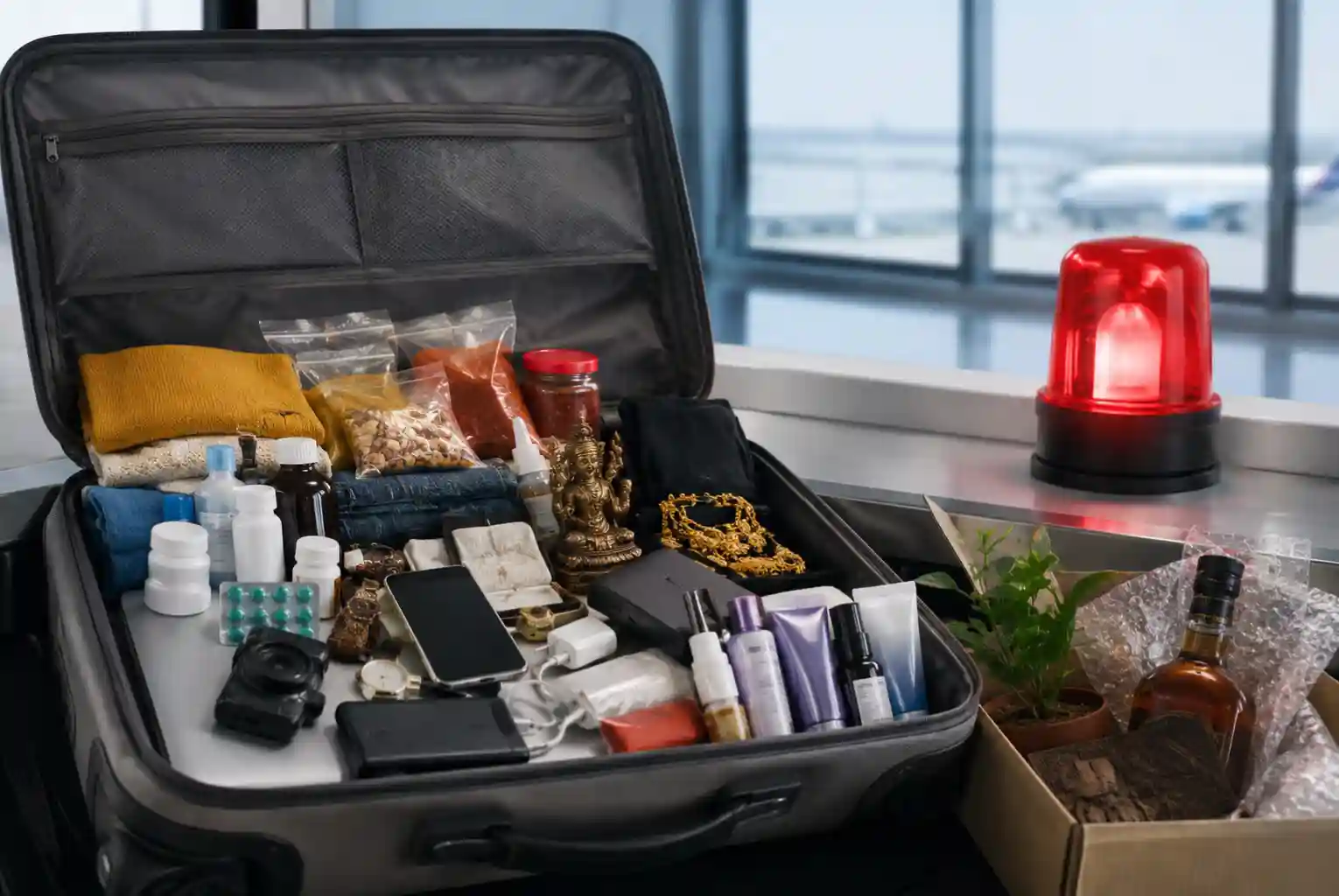
Every year, thousands of families, students, NRIs, and professionals begin moving abroad from India with carefully packed shipments, only to face unexpected delays, fines, or confiscation at destination customs. The reason is rarely contraband. It is almost always ordinary household items that were packed without understanding international import regulations.
Customs authorities worldwide do not distinguish between ignorance and intent. If a restricted item is found in your shipment, the consequences are the same: delays, penalties, or rejection. This guide breaks down 11 everyday items that consistently create customs problems during international relocation from India and tells you exactly what to do about each one.
Why Customs Flags Common Household Items During International Relocation
Most people assume customs only targets illegal goods. In reality, customs officers screen for a much broader category of items: goods that violate biosecurity laws, exceed duty-free limits, require special permits, or pose safety and health risks.
Items that are completely legal in India may be restricted, regulated, or outright banned at your destination. Without proper documentation or declaration, even everyday goods can trigger inspections, seizure, or legal notices.
Understanding Restricted vs Prohibited Items
Before packing a single box, understand this distinction:
- Restricted items can be imported but require permits, declarations, or specific packaging conditions.
- Prohibited items cannot be imported under any circumstances and will be seized and potentially lead to prosecution.
Knowing which category your goods fall into is the foundation of customs-compliant international shipping.
11 Everyday Items That Frequently Create Customs Issues
1. Medicines and Health Supplements
Prescription medicines are among the most commonly flagged items. Many countries impose strict limits on the quantity allowed, and certain drug formulations legal in India are controlled substances elsewhere.
Always carry a valid prescription, doctor's letter, and a translated document if required by the destination country. Pack medicines in original labeling. Supplements containing herbs, steroids, or proprietary blends may be classified differently abroad.
2. Spices, Pickles, and Homemade Food
That jar of mango pickle or bag of dried spices may seem harmless. To destination customs, it represents a potential biosecurity threat. Countries like Australia, the USA, Canada, and New Zealand have some of the strictest quarantine restrictions on organic and food items.
Homemade foods are almost universally flagged. Commercial packaged spices are often allowed but must be factory-sealed and labeled. Never pack homemade food in checked luggage or shipping containers without verifying destination rules.
3. Gold Jewelry and Precious Metals
Gold jewelry is one of the highest-risk items in any international shipment from India. Most countries require declaration if the value exceeds a set threshold. Some impose import duty. Others require proof of purchase or valuation certificates.
Undeclared gold at destination airports can be confiscated. Always declare jewelry at both departure and arrival, carry purchase receipts or a certified valuation, and consider purchasing transit insurance for high-value items.
4. Electronic Devices and Batteries
Lithium batteries in laptops, phones, cameras, and portable devices are strictly regulated on international flights and in sea freight. Loose lithium batteries are prohibited in checked baggage and sea shipments in most jurisdictions.
Devices must be packed with batteries installed, in carry-on luggage only, unless specific freight exceptions apply. High-wattage batteries in power tools or medical equipment require separate compliance documentation.
5. Kitchen Appliances and Electrical Items
Voltage incompatibility is just one issue. Many countries require appliances to meet local electrical safety certifications. Items lacking these certifications can be held at customs or denied import.
Pressure cookers, rice cookers, mixers, and grinders are frequently packed but may not meet destination safety standards. Check CE marking requirements for Europe, UL standards for the USA, and equivalent certifications for other regions before packing.
6. Plants, Seeds, and Organic Materials
Soil, seeds, dried flowers, wooden items, and live or dried plants are biosecurity-sensitive in most developed countries. Even a small packet of methi seeds or a decorative wooden artifact with natural bark can trigger quarantine inspection and confiscation.
Do not pack any organic material without checking the destination country agricultural import rules. Fumigation certificates may be required for wooden furniture or packing materials.
7. Liquids, Aerosols, and Cosmetics
Airlines restrict liquids to 100ml per container in carry-on bags, with a maximum of 1 litre total. Aerosols in shipments are classified as hazardous materials under international freight regulations.
Perfumes, deodorants, and cosmetics containing alcohol, flammables, or pressurized components require specific labeling and packing. Violations can result in shipment rejection by the freight carrier before customs even gets involved.
8. Cash and Financial Documents
Carrying more than USD 5,000 equivalent in cash without declaration is an offense in most countries. India also imposes strict limits on foreign currency carried out of the country under FEMA regulations.
Original property documents, fixed deposit receipts, and share certificates should not be packed in shipping containers. These must travel with you as hand carry, with photocopies stored separately. Loss or seizure of original financial documents can have lasting legal consequences.
9. Alcohol and Tobacco Products
Most countries impose strict limits on duty-free alcohol and tobacco. Exceeding these limits without declaration results in duty payment, confiscation, or both. Some countries have zero tolerance for alcohol imports without a permit.
Tobacco products, including cigarettes and smokeless tobacco, have import limits and labeling requirements that vary significantly by destination. Always check current limits before packing.
10. Religious Items and Cultural Artifacts
Idols, sculptures, and religious objects made from ivory, coral, certain woods, or animal-derived materials may violate CITES regulations or local import laws. Even a small Ganesh idol made from certain materials can be seized.
Antique cultural items require export clearance from the Archaeological Survey of India if they are over 100 years old. Attempting to export antiques without this clearance is a criminal offense in India and a customs offense at the destination.
11. Antique or High-Value Decorative Items
Items perceived as high-value or antique trigger duty assessments and authenticity verification. Undervaluing such items on customs declarations is a common mistake that leads to penalties.
Get a certified valuation for high-value art, silverware, and collectibles. Declare honestly and carry supporting documentation.
Country-Specific Customs Rules People Often Overlook
Destination rules vary significantly. Australia and New Zealand have some of the strictest biosecurity laws globally. The UAE prohibits certain medications and food items. The USA requires detailed declarations for goods exceeding USD 800 in value. Canada restricts certain firearms, weapons, and animal products.
Research your specific destination thoroughly. Relying on general advice without checking current bilateral import agreements and country-specific restrictions is one of the most common mistakes in overseas relocation from India.
Common Packing Mistakes That Trigger Customs Inspections
- Mixing food items with clothing or household goods
- Packing medicines without prescriptions or original labels
- Not declaring jewellery or high-value items at departure
- Using organic packing material like straw or dried leaves
- Packing aerosols or compressed gas items in sea freight
- Including used electronic equipment without purchase documentation
How Professional International Movers Help Avoid Customs Problems
A qualified international relocation company brings compliance knowledge that most individuals do not have. They prepare accurate packing inventories, advise on restricted and prohibited items, assist with documentation for high-value goods, and coordinate with destination customs agents.
Before hiring a mover, ask specifically: Do you provide customs documentation support? Do you have licensed customs agents at destination? Can you advise on country-specific restricted items?
These questions separate compliance-capable movers from those who simply load and ship.
Tips for Faster Customs Clearance During Overseas Relocation
- Prepare a detailed, item-by-item packing inventory
- Declare all valuables accurately at origin customs
- Carry all medical documentation in your hand luggage
- Ensure all electrical appliances have destination-compatible certifications
- Store financial and legal documents separately from shipped goods
- Hire movers experienced in your specific destination country
Final Checklist Before Shipping Household Goods Abroad
Before your shipment leaves India, verify the following:
- All restricted items are documented and declared
- Medicines carry prescriptions and dosage letters
- Jewellery and valuables have valuation certificates
- No food, seeds, or organic materials are packed without checking destination biosecurity laws
- Lithium batteries comply with air freight or sea freight regulations
- Electrical appliances meet destination country safety standards
- High-value items are accurately valued on the customs declaration
- Original financial and legal documents are traveling with you as hand carry
Conclusion
Moving abroad from India involves far more than packing boxes and booking flights. Every item in your shipment is subject to customs scrutiny at your destination. The 11 categories covered in this guide represent the most common sources of customs problems for Indian families, students, NRIs, and professionals relocating internationally.
The solution is straightforward: know the rules, document everything, declare honestly, and work with relocation professionals who understand international customs compliance. The cost of preparation is minimal. The cost of getting it wrong can be substantial.
Pack smart. Declare accurately. Move with confidence.
Our Blogs

WHERE DO MOST INDIANS LIVE IN THE USA? TOP CITIES & STATES
Wondering where most Indians live in the USA? Explore the top states and cities, including California, Texas, New York, New Jersey, and Chicago. Discover popular Indian communities, population trends, and helpful tips for relocating from India to the USA.

MOVING TO THAILAND FROM INDIA: A COMPLETE RELOCATION GUIDE
Planning to move to Thailand from India? Explore visa requirements, essential documents, customs regulations, household shipping options, and estimated relocation costs. Discover practical moving tips and learn how professional international movers like PM Relocations can help you enjoy a smooth, safe, and stress-free relocation to Thailand.
BEST COUNTRIES FOR INDIANS TO SETTLE ABROAD: A PRACTICAL COMPARISON
Planning to settle abroad? Discover the best countries for Indians to settle abroad, including Canada, Australia, Germany, the UK, New Zealand, the USA, and UAE. Explore job opportunities, permanent residency options, visa requirements, living costs, and quality of life in each country. This practical guide helps Indian professionals, students, and families compare popular destinations, understand international relocation costs, and choose the right country for a better future. Get useful tips on moving abroad from India, preparing important documents, and planning a safe, smooth, and stress-free international move.
 Post Feedback
 Gallery
 Awards & Media
 FAQ
FAQ CSR & Sustainability
.svg)