






RELOCATING WITH ELDERLY PARENTS? 7 OVERLOOKED CHALLENGES THAT CAN TURN YOUR MOVE INTO A CRISIS
Introduction
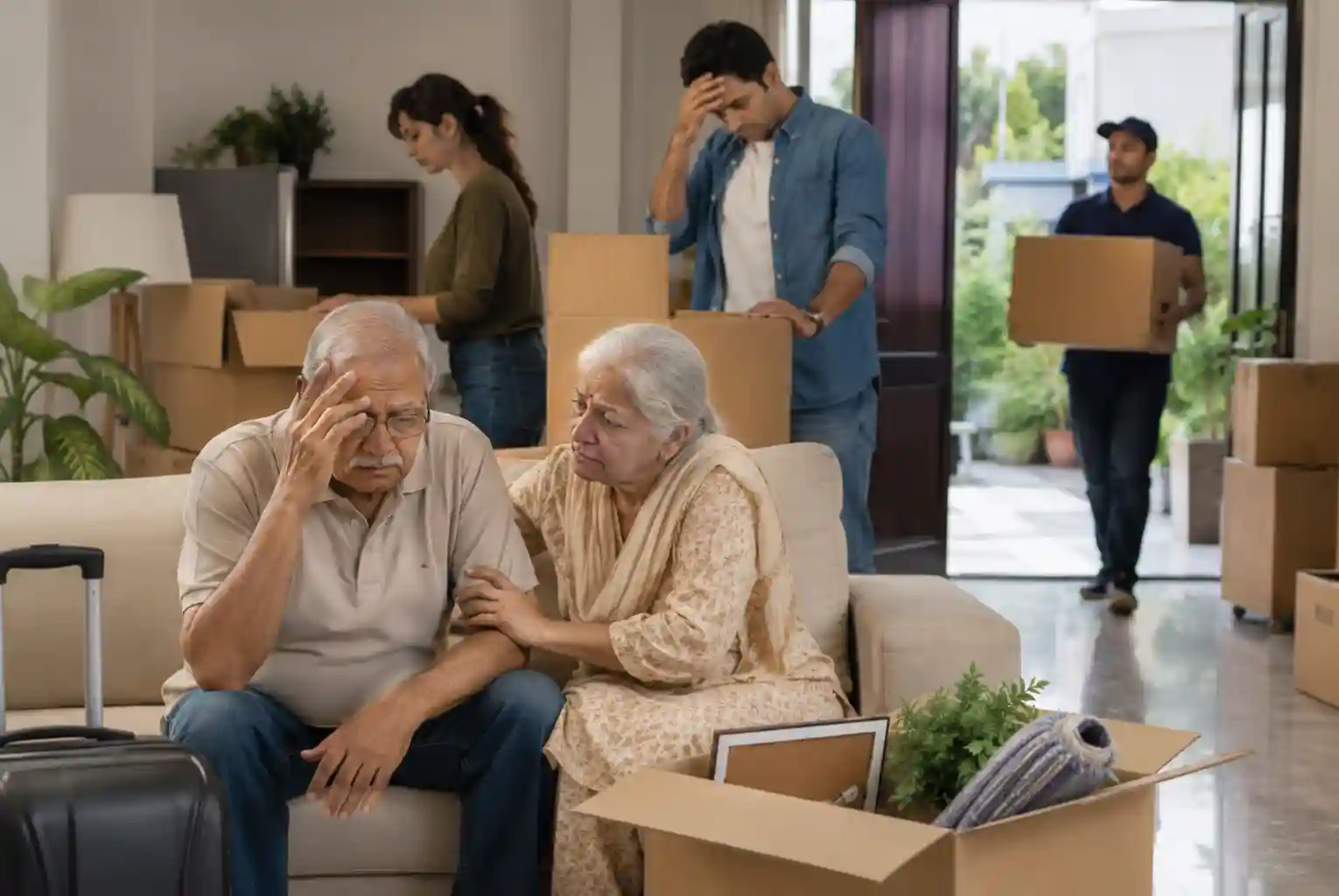
Relocating with elderly parents is fundamentally different from any standard household move. The physical distance, health requirements, emotional adjustment, and logistical complexity all multiply when a senior family member is involved. Yet most families approach it the same way they would any other move, and that gap in planning is exactly where crises happen.
This guide covers the seven most overlooked challenges families face during senior citizen relocation in India and beyond, along with actionable steps to manage each one responsibly.
Why Relocating with Elderly Parents Is Not a Standard Move
A regular relocation involves packing boxes, arranging transport, and settling in. Moving with aging parents layers several additional responsibilities on top: managing chronic health conditions, coordinating with doctors, ensuring physical safety throughout transit, and preparing the new home before day one.
Families who treat this as just another move typically discover the hard way that even a short-distance relocation can cause serious health setbacks, emotional distress, or dangerous confusion for elderly family members.
The 7 Overlooked Challenges Families Must Address
Challenge 1: Disruption to Medical Continuity
One of the most dangerous and underestimated risks in elderly parents moving is the break in medical continuity. Many seniors manage multiple chronic conditions, regular check-ups, specialist visits, and ongoing prescriptions.
What families miss:
- Failing to transfer medical records before the move
- Not researching doctors or specialists at the destination in advance
- Arriving at a new city with no primary care physician lined up
What to do: At least 4 to 6 weeks before the move, request complete medical records, prescription histories, and specialist reports. Research and shortlist hospitals and doctors at the destination. If possible, schedule the first appointment before you leave the current city.
Challenge 2: Medication Management During Transit
Safe transportation of medications is rarely given the attention it deserves. Many families pack medicines along with regular household items, which creates serious risks, especially during long-distance moves or air travel.
Temperature-sensitive medications, refrigerated injections, and controlled substances all require specific handling. Losing or misplacing medication during a 2-day transit can trigger a medical emergency.
What to do:
- Pack all medications in a separate, clearly labeled bag carried personally
- Carry a minimum of 7 to 10 extra days of supply as a buffer
- Keep prescriptions and dosage instructions in writing alongside the medicines
- Check airline or transport regulations for controlled medications before travel
Challenge 3: Mobility and Accessibility Failures in the New Home
Families often arrange the move without first auditing the new home for senior safety. This results in a living environment that looks fine on paper but creates real fall and injury risks from day one.
Common problems include high-threshold bathroom entries, slippery floors, beds that are too low or too high, and staircases with no handrails.
What to do:
- Conduct a physical inspection of the new home before moving in
- Install grab bars in bathrooms, non-slip mats on floors, and proper lighting in corridors
- Ensure the bedroom and bathroom are on the same floor if possible
- Check that mobility aids like wheelchairs and walkers can move freely through the home
Challenge 4: Emotional and Psychological Stress
The emotional impact of relocation on elderly parents is consistently underestimated. Seniors often have deep attachments to their existing neighbourhood, social circle, temple or place of worship, and daily routine. Uprooting all of that without preparation leads to confusion, withdrawal, and sometimes depression.
What to do:
- Begin conversations about the move early, giving parents time to process
- Involve them in decisions, even small ones, about the new home
- Help recreate familiar routines as quickly as possible in the new location
- Identify local community centres, religious spaces, or senior groups at the destination
Challenge 5: Physical Safety During Moving Day
Moving day itself carries a significant injury risk for elderly family members. Unorganised packing, unfamiliar staircases, tripping hazards from boxes, and the general chaos of a move are all dangerous for seniors with limited mobility or balance issues.
What to do:
- Keep elderly parents away from the active packing and loading area
- Assign a specific family member or caregiver to be with them throughout the day
- Ensure they have a safe, quiet, and accessible space during the entire process
- Do not allow elderly parents to carry any items, even light ones, without supervision
Challenge 6: Caregiver and Support System Gaps
Many families rely heavily on local caregivers, domestic help, or support staff who are familiar with the elderly parent's routine and needs. This network does not automatically transfer when you move cities.
Rebuilding a reliable caregiving support system at the new location takes weeks, sometimes months. During that gap, the senior is left without adequate support, and the family is left scrambling.
What to do:
- Begin searching for caregivers or home help at the destination at least 3 to 4 weeks before the move
- Brief the new caregiver in writing about medical routines, dietary restrictions, and emergency contacts
- Consider hiring from a professional agency rather than informal arrangements for faster reliability
Challenge 7: Long-Distance Travel Fatigue and Health Decline
For long-distance relocation with elderly parents, the travel itself, whether by train, air, or road, can be physically exhausting. Dehydration, irregular meals, disrupted sleep, and hours of immobility can worsen existing health conditions and sometimes trigger acute events.
What to do:
- Plan travel with appropriate rest stops and avoid overnight journeys when possible
- Carry comfort items including a neck pillow, a light blanket, and easy-to-eat snacks
- Maintain hydration strictly throughout the journey
- If the elderly parent has cardiac, respiratory, or orthopaedic conditions, consult their doctor before finalising travel mode and duration
DIY Moving vs. Professional Relocation Services
Most families attempt to manage senior citizen relocation on their own, primarily to save costs. This works for straightforward household moves. It rarely works well when elderly parents are involved.
Professional relocation companies experienced in senior moves bring structured planning, trained staff, specialised packing for medical equipment and mobility aids, and transit coordination that reduces both physical and emotional strain.
Before hiring a relocation company, ask:
- Do they have prior experience with senior or elderly relocations?
- Can they handle medical equipment and fragile mobility aids?
- Do they offer dedicated support during the transit day?
- What is their process for handling delays or emergencies during the move?
Preparing the New Home Before Arrival
The new home must be ready before your elderly parents step through the door. Do not plan to settle things after arrival. A home that is mid-setup is a fall and confusion hazard.
Pre-arrival checklist:
- Bedroom and bathroom essentials in place
- Grab bars and non-slip mats installed
- Night lights in all corridors
- Emergency contact list posted visibly
- First week of meals planned or arranged
Helping Elderly Parents Adjust After the Move
Adjustment after relocation does not happen in a week. Give your parents time, structure, and patience. Re-establish familiar routines as quickly as possible. Help them form one new social connection within the first two weeks, whether through a neighbour, community group, or religious space.
Track their health closely for the first month. Any unusual fatigue, appetite changes, or emotional withdrawal should be addressed with a medical consultation rather than assumed to be temporary.
Final Checklist for Relocating with Elderly Parents
- Medical records transferred and destination doctors identified
- Medications packed separately with a 7-to-10-day extra supply
- New home inspected and safety modifications completed
- Caregiver or support system arranged at the destination
- Travel plan reviewed with the elderly parent's doctor
- Emergency contacts and medical documents are carried in person
- Family member assigned exclusively to the elderly parent on moving day
- Familiar routine and comfort items prioritised in the first week
Conclusion
Relocating with elderly parents requires a level of planning that goes well beyond standard household moving. The seven challenges covered in this article are the ones families most often overlook, and each carries real consequences if ignored. Start planning early, coordinate medical continuity, prioritise safety at every step, and do not underestimate the emotional dimension of this transition. A well-planned senior relocation is not just possible. It is entirely manageable when approached with the right preparation.
Our Blogs

BEST COUNTRIES FOR INDIANS TO SETTLE ABROAD: A PRACTICAL COMPARISON
Planning to settle abroad? Discover the best countries for Indians to settle abroad, including Canada, Australia, Germany, the UK, New Zealand, the USA, and UAE. Explore job opportunities, permanent residency options, visa requirements, living costs, and quality of life in each country. This practical guide helps Indian professionals, students, and families compare popular destinations, understand international relocation costs, and choose the right country for a better future. Get useful tips on moving abroad from India, preparing important documents, and planning a safe, smooth, and stress-free international move.

MOVING TO SPAIN FROM INDIA: VISA, COST OF LIVING & RELOCATION GUIDE
Planning on moving to Spain from India? Relocating to Spain can be exciting, but it also requires careful planning for visas, documents, housing, living costs, and international moving. This guide explains the key visa requirements, cost of living in Spain, relocation expenses, shipping options, important paperwork, and practical steps to help you plan a safe and well-organised move from India to Spain.

COST OF LIVING IN BANGKOK: A COMPLETE MONTHLY EXPENSE GUIDE
Thinking of moving to Thailand's capital? The cost of living in Bangkok depends on your area, your food habits, and how you travel. This guide breaks down monthly rent, food, transport, and utility bills in Thai baht and Indian rupees. You will also find sample budgets for budget, comfortable, and high-end lifestyles, the latest 30-day visa-free rule for Indians, common mistakes to avoid, and simple tips to save money before you move.
 Post Feedback
 Gallery
 Awards & Media
 FAQ
FAQ CSR & Sustainability
.svg)