






THE FIRST 24 HOURS AFTER MOVING: WHAT SHOULD YOU UNPACK AND SET UP FIRST?
Introduction
Moving day often ends with one big question: where do you start? Boxes may be in every room. You may also have tired family members, children, or pets to care for. A clear plan for what to unpack first after moving can make the first night much easier.
This guide gives you a simple first 24 hours after moving plan. It covers safety, utilities, the essentials box, room-by-room setup, documents, India-specific points, and tasks that can wait. It also shows what can wait until day two, so you do not waste energy too early. The goal is not a perfect home. The goal is a home that works by bedtime.
PM Relocations also recommends keeping medicines, toiletries, chargers, documents, clothes, and other daily-use items easy to reach after delivery.
What to Unpack First After Moving in the First 24 Hours
The best order is simple: safety, essentials, bathroom, bed, simple food, daily clothes, and then everything else. A clear moving checklist can also help keep delivery, unpacking, furniture setup, and utility checks organised. PM Relocations' checklist specifically includes unloading, unpacking, furniture reassembly, and setup checks at the destination.
|
Priority |
Unpack or set up |
Why it comes first |
|
Immediate |
Medicines, phone, chargers, documents |
Health, contact, and proof |
|
Immediate |
Water, power, locks, gas safety |
Basic home use and safety |
|
First 2 hours |
Toiletries, towels, toilet paper |
Makes the bathroom usable |
|
Before evening |
Beds, sheets, pillows |
Everyone can sleep |
|
Before meal time |
Plates, cups, one pan, simple food |
Basic meals are possible |
|
By 24 hours |
Clothes, school/work kit, pet or child items |
Makes the next morning easier |
First two hours: check the home
Walk through the home before opening many boxes. Check doors, windows, visible leaks, taps, lights, and obvious damage. Keep main walking areas clear while boxes and furniture are still being moved.
If you smell LPG, open windows immediately. Do not continue using the stove until the problem has been checked. India has a 24×7 LPG emergency helpline at 1906. Bharat Petroleum advises opening windows in case of a gas leak, while HPCL identifies 1906 as the emergency LPG leakage number.
Keep children and pets away from stacked cartons, tools, open doors, balconies, and loose wires.
Next few hours: open the moving essentials box
Your moving essentials box should be the first bag or carton you open. It should contain the things you cannot comfortably wait until tomorrow to find.
Useful first-night essentials include:
· Daily medicines, toiletries, towels, toilet paper, and a change of clothes.
· Phone and laptop chargers, keys, important papers, drinking water, snacks, and a few kitchen items.
· Food, bedding, or medicines needed by a baby, older family member, or pet.
Keep these items together until the important rooms are ready. A clearly labelled box is much easier to identify during unloading. PM Relocations' home shifting services also cover organised unloading and unpacking support, and its guidance recommends keeping essential items accessible during the first few days.
Before dinner: make three rooms usable
Set up the bathroom first. Put out soap, toilet paper, towels, toothbrushes, and daily medicines. You do not need to arrange every shelf.
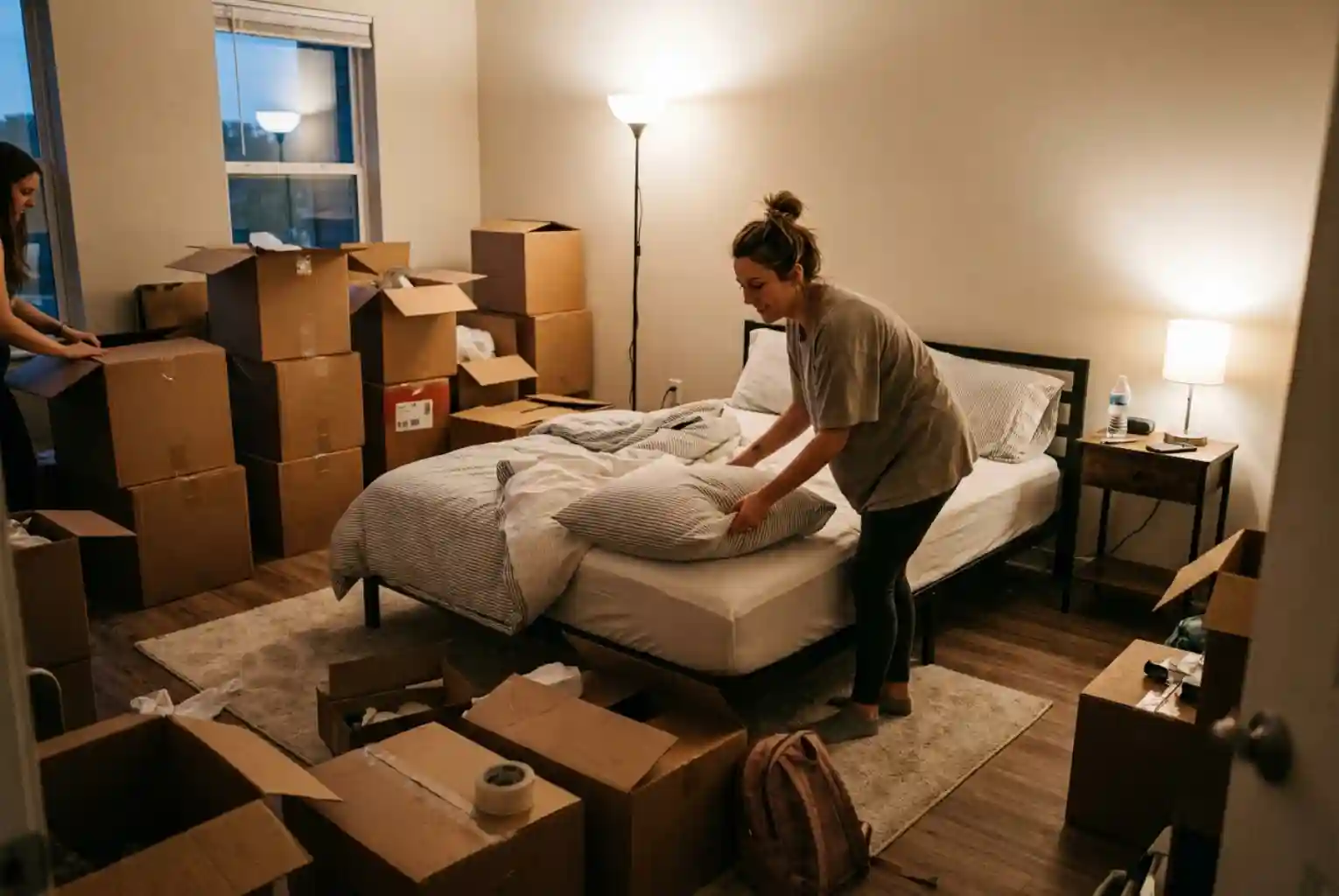
Next, make the beds. Add sheets, pillows, and blankets. Leave decor, spare bedding, books, and seasonal clothes for later.
In the kitchen, unpack only enough for one simple meal and the next morning. Start with drinking water, a few plates and cups, one pan or kettle, basic cutlery, and food.
Before sleep: check boxes and prepare for tomorrow
Compare delivered cartons with your inventory or mover list. Photograph obvious damage before throwing away protective packing. If something is damaged or missing, tell the mover quickly and follow the claim process and time limit written in your contract, insurance document, or valuation terms.
Prepare clothes, laptop or school bags, wallet, keys, medicines, and chargers for the next morning.
Tasks such as local registrations, wider address updates, neighbourhood setup, and other settling-in work can continue after day one. PM Relocations' first 72 hours after moving guide covers that wider post-move period.
First 24 Hours Moving Timeline

Room-by-Room New Home Setup Checklist
A room-by-room unpacking checklist stops you from opening five rooms at once. Finish the useful parts of one area before moving to the next.
Bedroom
Make at least one sleeping area usable. Set up the bed, bedding, phone charger, and one set of clothes. Leave books, decor, spare linen, and full wardrobe organisation for another day.
Bathroom
Set out toilet paper, soap, towels, toothbrushes, basic cleaning items, and medicines. Check taps and drains before filling cabinets.
Kitchen
Start small. Unpack drinking water, a few dishes, one cooking pot, cutlery, and easy food. Clean the work surface before placing food or utensils on it.
Living room and work area
Clear walking space first. Furniture styling can wait.
If you work from home, set up your laptop, charger, internet access, and one comfortable chair before unpacking entertainment systems or decorative items.
Children and pets
Create one calm area with familiar bedding, food, water, medicines, and favourite items. Keep pets away from the main door while people are still carrying boxes in and out.
India: Safety, Documents, Timelines, and Basic Costs
Keep important papers together rather than placing them inside normal moving cartons. Useful documents include your photo ID, rental agreement or possession papers, mover invoice, inventory, insurance or valuation papers, utility details, and any building move-in permission that applies to your property.
Apartment society rules for moving vehicles, parking, service lifts, or entry times can vary by property. PM Relocations also notes that residential societies and gated communities may have their own access and moving rules.
For electrical items, India’s Bureau of Indian Standards has safety requirements and compulsory-certification coverage for plugs, socket outlets, and many household electrical appliances. Do not use visibly damaged plugs, exposed wires, or loose sockets simply because you want to finish unpacking quickly.
|
Move-in item |
Cost/status |
Practical note |
|
Professional unpacking or handyman |
Unspecified |
Depends on work and quotation |
|
Utility transfer or activation |
Unspecified |
Depends on provider and city |
|
Housing society move-in fee |
Unspecified |
Building-specific, where applicable |
|
Aadhaar address update |
75 Rupees |
Current UIDAI listed fee; not a first-night task |
UIDAI's current My Aadhaar page, last updated June 26, 2026, lists a 75 Rupees fee for its address-update service. There is no practical reason to make this part of your first-night unpacking routine; handle document updates after immediate home needs are under control.
For electricity, water, internet, gas, and related move-in needs, PM Relocations offers utility connection assistance. Its service page says this can include coordination with providers, installation appointments, paperwork, and setup at the new address.
Do not rush into drilling walls, mounting a TV, rebuilding large furniture, or connecting an appliance when you are unsure how to do it safely. PM Relocations' handyman services cover furniture reassembly, wall mounting, fixtures, and certain appliance connections after unpacking.
Why Professional Relocation Services Can Help
Professional movers can reduce the physical work involved in moving day. Depending on the service package, support may include professional packing, safe loading and unloading, transportation, unpacking, furniture placement, and move coordination. PM Relocations describes its home-moving process as covering planning, packing, transport, unloading, and unpacking.
Trained teams can also place labelled boxes in the right rooms and handle bulky or fragile items with more planning. Some relocation packages may include shipment tracking, documentation support, insurance or valuation assistance, and door-to-door coordination. The exact service scope should always be confirmed before booking.
Not every item has to be unpacked immediately. Storage and warehousing can be useful when a new home is smaller, still being prepared, or not ready for all household goods. PM Relocations states that its storage pricing depends on factors such as volume, duration, and destination.
Families who need help after delivery can also use settling-in services for matters such as internet connections, household requirements, local services, and getting familiar with the new area.
Professional help does not remove every task. You still need to protect personal papers, check delivered goods, and decide where belongings should go. Ask what is included in writing before you book. Readers comparing end-to-end options can also review professional packers and movers in India on the main PM Relocations website.
Frequently Asked Questions
FAQ 1. What should you unpack first after moving?
Start with your moving essentials box. Open medicines, toiletries, chargers, important documents, water, basic clothes, towels, and simple food items first. Then make the bathroom and beds usable. This is the simplest answer to what to unpack first after moving because it covers health, hygiene, food, communication, and sleep before non-essential items.
FAQ 2. What should I set up first in a new home?
Check safety and utilities setup first. Make sure you have water and power and that doors close properly. Then make one bathroom and one sleeping area usable. A good new home setup checklist should focus on what you need today rather than trying to finish every room in one evening.
FAQ 3. What should be in a moving essentials box?
A moving essentials box should contain medicines, toiletries, toilet paper, towels, chargers, clothes, keys, important papers, drinking water, snacks, and a few basic dishes. Add anything a child, older family member, or pet needs daily. Keep this box with you or make sure movers can unload it first. PMR also recommends keeping such daily essentials easily accessible. [3]
FAQ 4. How soon should I report damage after moving?
Check visible furniture and cartons as soon as possible after delivery. Take clear photos of any damage and note missing items. Tell the mover promptly. Don't assume every mover has the same claim deadline. Read your moving agreement, insurance document, or valuation terms and follow the process written there.
FAQ 5. Can professional movers unpack and set up my home?
Some professional relocation services include unpacking and basic setup, while others offer these as extra services. Ask whether the team will place boxes by room, reassemble furniture, handle fragile items, remove packing waste, or help with appliance setup. PM Relocations lists unpacking and destination setup within its broader home-moving support.
Conclusion
The best first day is not the day you empty every carton. It is the day your new home becomes safe and usable.
When deciding what to unpack first after moving, focus on utilities, medicines, your moving essentials box, bathroom, beds, simple food, and next-day needs. Follow a simple moving unpacking checklist instead of trying to finish everything at once. Leave decor, deep organisation, and non-essential boxes for later. A clear order helps you settle in with less searching, less confusion, and a much easier first night.
Our Blogs

BEST PLACES TO LIVE IN CANADA FOR INDIAN FAMILIES AND IMMIGRANTS
Planning to move from India to Canada in 2026? Discover the best places to live in Canada for Indian families and immigrants, including Toronto, Vancouver, Calgary, Edmonton, and Winnipeg. Explore affordable cities, housing and living costs, career opportunities, immigration requirements, healthcare facilities, and education options for children. This comprehensive guide also covers Canada Express Entry proof of funds, international shipping costs, customs documentation, and essential relocation tips to help Indian families plan a smooth, affordable, and stress-free move to Canada.

WHERE DO MOST INDIANS LIVE IN THE USA? TOP CITIES & STATES
Wondering where most Indians live in the USA? Explore the top states and cities, including California, Texas, New York, New Jersey, and Chicago. Discover popular Indian communities, population trends, and helpful tips for relocating from India to the USA.

MOVING TO THAILAND FROM INDIA: A COMPLETE RELOCATION GUIDE
Planning to move to Thailand from India? Explore visa requirements, essential documents, customs regulations, household shipping options, and estimated relocation costs. Discover practical moving tips and learn how professional international movers like PM Relocations can help you enjoy a smooth, safe, and stress-free relocation to Thailand.
 Post Feedback
 Gallery
 Awards & Media
 FAQ
FAQ CSR & Sustainability
.svg)