






WHAT TYPE OF MOVING BOXES DO YOU NEED? A COMPLETE PACKING GUIDE
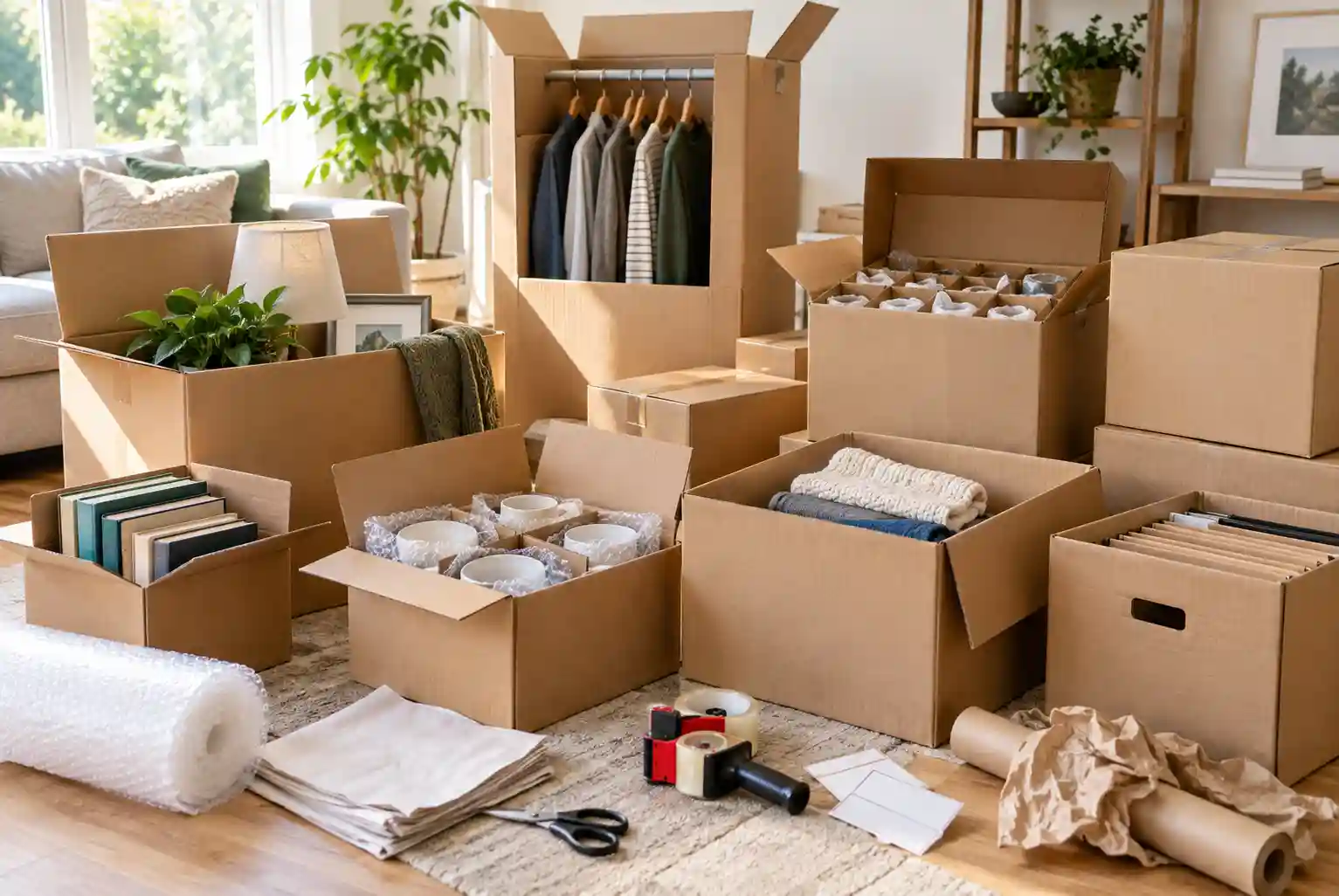
Moving to a new home can feel simple until you start packing. Then one big question appears: what type of moving boxes do you need? The wrong box can become too heavy, tear during lifting, or leave fragile items with too much room to move. The right moving boxes make packing safer and unpacking much easier.
Most homes need more than one box size. Heavy books need small cartons. Medium cartons work well for clothes and toys. Bedding needs bigger cartons. Glassware, TVs, mirrors, and hanging clothes may need special boxes. Professional packing guidance also recommends strong boxes, proper cushioning, secure tape, and little space inside the carton.
This guide explains the main moving box sizes, what to put in each one, how to pack them, and what Indian families should know before a move.
What Type of Moving Boxes Do You Need?
For most household moves, you need a mix of small, medium, large, and special-purpose packing boxes.
A simple rule works well: small boxes for heavy things and large boxes for light things. Recent professional moving advice also warns against putting heavy goods in oversized cartons because large, overloaded boxes become hard to lift and more likely to fail.
|
Box type |
Best for |
Main reason |
|
Small moving boxes |
Books, tools, tins, small appliances |
Keeps heavy loads manageable |
|
Medium cardboard moving boxes |
Toys, clothes, kitchen items |
Useful for many household items |
|
Large boxes |
Bedding, pillows, towels |
Best for bulky but light goods |
|
Wardrobe boxes |
Suits, dresses, hanging clothes |
Clothes stay on hangers |
|
Dish boxes |
Plates, bowls, glasses |
Stronger walls and dividers add protection |
|
TV boxes |
Flat-screen TVs |
Better fit and padding for screens |
|
Mirror or picture boxes |
Mirrors, frames, artwork |
Protects flat, fragile items |
|
File boxes |
Papers and office files |
Keeps documents organised |
Commercial moving box sizes are not completely universal. As one industry example, Asian Tigers lists small cartons around 26 × 31 × 31 cm, medium cartons around 46 × 46 × 41 cm, and large cartons around 46 × 46 × 61 cm. Its guide recommends larger sizes mainly for light items such as blankets and pillows.
So, do not buy boxes by the word “medium” or “large” alone. Check the actual measurements and the box maker's stated weight limit.
Choosing the Right Moving Boxes for Each Item
The best boxes for moving house depend on what is going inside them. Weight, shape, value, and fragility all matter.
Everyday Moving Box Sizes
Small boxes: Use these for books, tools, canned food, small kitchen appliances, and other dense items. Small cartons make heavy goods easier to control.
Medium boxes: These are the main workhorses of a move. They are useful for folded clothes, toys, small electronics, cookware, and many bedroom or kitchen items.
Large boxes: Use these for pillows, blankets, bed sheets, soft toys, towels, and light clothing. Do not fill a very large box with books. A box that is hard for one person to lift safely is probably too heavy.
For Indian home shifting boxes, good-quality corrugated boxes are usually the practical choice. UPS India recommends a rigid box with its flaps intact and says users should not exceed the weight limit printed on the box.
Specialty Boxes for Fragile or Bulky Items
Use wardrobe boxes when you want suits, sarees on hangers, dresses, jackets, or formal clothes to stay hanging. These cartons contain a hanging bar, so clothes do not have to be folded.
Use dish boxes or strong double-wall cartons for crockery and glassware. Dish cartons may contain dividers that stop glasses or plates from hitting each other. For fragile goods, UPS recommends cushioning and says a two-box method can be used for sharp or fragile items, with cushioning around the inner box.
Pack plates upright rather than laying a large stack flat. Professional packing guidance recommends wrapping each item, cushioning the bottom of the carton, and clearly marking the package as fragile.
Use an adjustable TV box for a flat-screen television when the original manufacturer box is no longer available. Specialist television cartons are commonly made to fit different screen sizes and provide space for protective padding.
Mirrors, paintings, and framed photos should go in picture or mirror cartons. These cartons are often adjustable, so the box fits closely around the item.
How to Pack Moving Boxes Safely
Knowing how to pack moving boxes matters just as much as choosing the carton.
Start early. A January 2026 moving guide based on advice from professional movers suggests allowing about a week for packing a one-bedroom home, with more time for larger homes. Your own timing will depend on how much you own and whether you are also sorting or donating items.
Follow these simple steps:
1. Check the box first. Do not use a wet, crushed, torn, or very weak carton.
2. Tape the bottom well. UPS India recommends proper shipping tape and advises against unsuitable options such as masking or cellophane tape.
3. Put heavier items at the bottom. Place lighter items above them.
4. Wrap fragile goods separately. Use packing paper, bubble material, foam, or another suitable cushion.
5. Fill empty spaces. Loose items can move and strike each other during transport. UPS recommends filling gaps with cushioning material.
6. Do not overfill the carton. The top should close flat without being forced.
7. Label every box. Good labelling moving boxes should include the room, basic contents, and words such as “FRAGILE” or “THIS SIDE UP” where needed.
8. Prepare an essentials box. Keep medicines, chargers, basic clothes, toiletries, important papers, and items needed on your first night with you rather than deep inside the moving truck.
Keep passports, Aadhaar cards, property papers, bank papers, jewellery, cash, keys, medicines, and irreplaceable documents with you rather than in ordinary house moving boxes.
There is no single Indian government rule that sets the size of cartons used inside a private household-moving truck. Different rules can apply when a carton is sent as a postal or courier parcel. For example, current India Post Parcel rules require compliant packaging and a declaration. Retail parcels may weigh up to 35 kg; maximum length is 1.5 metres, and length plus girth must not exceed 3 metres.
For people sending a few cartons separately, India Post's retail tariffs effective August 1, 2026 start at ?28 for a local parcel up to 500 g, with higher rates based on weight and destination; GST applies as applicable. These are postal charges, not household mover prices.
Why Professional Relocation Services Can Help
Professional movers can be useful when you have many moving boxes, fragile goods, large furniture, appliances, or a long-distance move.
A trained packing team can choose different cartons for books, clothes, crockery, electronics, artwork, and other goods. They can also wrap items, load the vehicle, arrange the load, transport it, and unload it at the destination. Professional packing can be especially helpful for bulky or fragile items that are difficult to handle safely.
Many organised relocation services also offer booking support, transport coordination, and shipment-related assistance. However, service levels differ between companies, so read the quotation and terms before paying.
Do not assume that “insurance” is automatically included. Policies vary. For example, Porter's current insurance FAQ states that its standard rates do not include insurance for the goods being shipped. Its terms also set specific procedures and time limits for reporting some damage claims.
Before choosing packers and movers, ask in writing:
· Are cartons, wrapping, tape, packing labour, loading, transport, and unloading included?
· Is door-to-door delivery included?
· Is tracking available?
· What damage or transit cover applies?
· What documents are needed for a claim?
· Are there separate charges for stairs, lifts, long carrying distance, storage, or special packing?
A clear written quote can reduce confusion later.
Frequently Asked Questions
What type of moving boxes do I need for a house move?
Most homes need small, medium, and large moving boxes, plus a few special cartons. Use small boxes for heavy items, medium boxes for normal household goods, and large boxes for light bulky items. Add wardrobe boxes, dish boxes, TV boxes, or mirror boxes when you have items that need extra protection.
What size moving box is best for books?
Small cardboard moving boxes are usually best for books. Books become very heavy when many are packed together. A smaller carton limits the total load and makes lifting easier. Industry moving guidance also places books among the normal uses for small cartons.
Can I use old cardboard boxes for moving?
Yes, but only when they are clean, dry, strong, and undamaged. Avoid boxes that are crushed, wet, torn, or too weak to hold their contents. For transport, UPS recommends a rigid box with intact flaps and says the stated box weight limit should not be exceeded.
Which boxes are best for fragile items?
Use strong boxes for fragile items, such as dish cartons or good-quality double-wall boxes. Wrap each object and fill empty spaces so items cannot move freely. For very fragile goods, a box-inside-a-box method can provide another protective layer.
Should moving boxes be full?
They should be full enough to stop contents from shifting, but not overpacked. Fill open spaces with packing paper, cushioning, or soft goods. The top should close normally. Both UPS guidance and professional movers recommend controlling empty space while avoiding overloaded cartons.
How should I label packing boxes for moving?
Write the destination room and a short description of the contents. Add “FRAGILE” and “THIS SIDE UP” when needed. Clear labels make unloading and unpacking easier and tell handlers when a carton needs special care.
Do packers and movers provide moving boxes in India?
Many professional packing services supply cartons and other packing materials as part of a relocation service, but the exact package varies by company. Ask for a written quotation showing what is included. Also check insurance separately rather than assuming your belongings are automatically covered.
Conclusion
The right moving boxes make a move safer, simpler, and easier to organise. Use small cartons for heavy items. Choose medium cartons for everyday goods. Keep large cartons for light, bulky belongings. Use special boxes for clothes, dishes, TVs, mirrors, and other fragile items.
Then pack each box carefully. Use strong packing tape, enough cushioning, clear labels, and no unnecessary empty space. Never make a carton so heavy that it becomes difficult to lift.
The main lesson is simple: do not look for one perfect box for everything. Choose packing boxes for moving based on the size, weight, shape, and fragility of each item. That small decision can make the whole move much more organised.
Our Blogs

WHERE DO MOST INDIANS LIVE IN THE USA? TOP CITIES & STATES
Wondering where most Indians live in the USA? Explore the top states and cities, including California, Texas, New York, New Jersey, and Chicago. Discover popular Indian communities, population trends, and helpful tips for relocating from India to the USA.

MOVING TO THAILAND FROM INDIA: A COMPLETE RELOCATION GUIDE
Planning to move to Thailand from India? Explore visa requirements, essential documents, customs regulations, household shipping options, and estimated relocation costs. Discover practical moving tips and learn how professional international movers like PM Relocations can help you enjoy a smooth, safe, and stress-free relocation to Thailand.

BEST COUNTRIES FOR INDIANS TO SETTLE ABROAD: A PRACTICAL COMPARISON
Planning to settle abroad? Discover the best countries for Indians to settle abroad, including Canada, Australia, Germany, the UK, New Zealand, the USA, and UAE. Explore job opportunities, permanent residency options, visa requirements, living costs, and quality of life in each country. This practical guide helps Indian professionals, students, and families compare popular destinations, understand international relocation costs, and choose the right country for a better future. Get useful tips on moving abroad from India, preparing important documents, and planning a safe, smooth, and stress-free international move.
 Post Feedback
 Gallery
 Awards & Media
 FAQ
FAQ CSR & Sustainability
.svg)