






MOVING ABROAD WITH AGING PARENTS FROM INDIA: THE MEDICAL, LEGAL, AND LOGISTICAL CHECKLIST NOBODY GIVES YOU
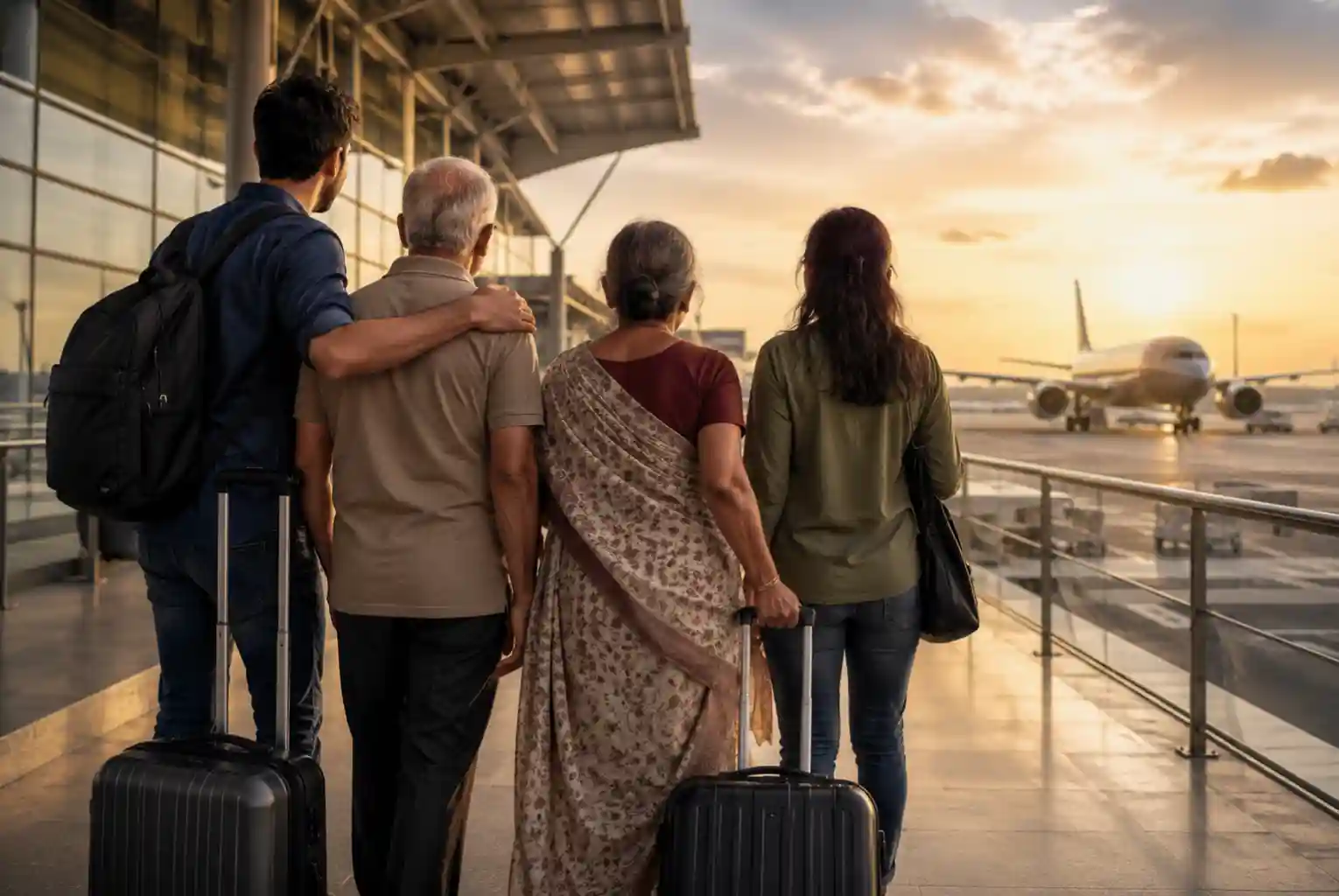
If you are planning on moving abroad with aging parents from India, you already know this is not a standard relocation. You are not just packing boxes and booking flights. You are managing a person's health, legal status, emotional stability, and daily routine across international borders. The stakes are significantly higher when the person being relocated is over 60, has chronic conditions, or is dependent on a structured routine.
Most relocation guides stop at visa types and packing lists. This one does not. Here is everything you need to plan, execute, and stabilize an international move with elderly parents, without the costly mistakes most families make.
Why Moving Abroad with Aging Parents from India Requires Special Planning
Standard relocation planning assumes a physically capable, legally self-sufficient adult. Elderly parents from India often bring a different set of variables: multiple specialists, long-standing prescriptions, dietary habits tied to regional cuisine, deep social networks they are leaving behind, and limited familiarity with foreign healthcare systems.
The combination of physical vulnerability, legal dependency, and cultural displacement makes relocating elderly parents internationally one of the most complex logistical challenges a family can face. Planning needs to begin at least 6 to 9 months in advance, not 6 weeks.
Common Challenges Families Face During Elderly Relocation
Understanding the failure points helps you avoid them. These are the most frequent problems NRI families encounter:
• Incomplete or untranslated medical records that foreign doctors cannot use
• Prescriptions for medicines that are unavailable or sold under different brand names abroad
• Health insurance plans purchased too late, often after a pre-existing condition disqualifies coverage
• Visa applications filed without adequate proof of financial dependency or medical documentation
• Long-haul flights without mobility assistance booked, leading to physical exhaustion or falls
• No identified local doctor or specialist at the destination before departure
• Emotional withdrawal or confusion in elderly parents after arrival, misread as simple adjustment fatigue
Medical Preparations Before Moving Abroad
Pre-Travel Health Assessment
Schedule a comprehensive medical evaluation at least 3 months before travel. This should include a full blood panel, cardiac assessment if applicable, dental clearance, ophthalmology review, and a review of all current medications. Ask the treating physician to provide a written fitness-to-travel certificate.
Organizing Medical Records and Prescriptions
This is where most families underestimate the work involved. You need complete, organized, and accessible medical records for relocation abroad. Specifically:
• All diagnostic reports from the last 3 to 5 years, organized by date and condition
• A written summary from each treating specialist covering diagnosis, treatment history, and status
• Prescriptions with both generic names and brand names of all medicines
• Vaccination history, including COVID-19 documentation
• A typed emergency medical summary in English that any foreign ER doctor can quickly read
Store digital copies in a shared cloud folder and carry physical copies in your hand baggage, not checked luggage.
International Health Insurance and Healthcare Planning
International health insurance for Indian seniors is non-negotiable. The critical mistake families make is buying a policy after arrival, by which point insurers either exclude pre-existing conditions entirely or impose waiting periods of 12 to 24 months.
When selecting a plan, verify these points before purchasing:
• Coverage for pre-existing conditions and the associated waiting period
• Emergency medical evacuation coverage
• Whether the destination country requires a specific minimum coverage amount for the visa type
• Direct billing agreements with hospitals at your destination, avoiding out-of-pocket payments followed by reimbursement claims
• Coverage for specialist consultations, physiotherapy, and prescription medicines
Countries like the USA and Australia require proof of adequate health coverage as part of the visa process. Do not treat insurance as a last step.
Visa, Legal, and Immigration Requirements for Senior Citizens
Senior citizen visa requirements vary significantly by destination. Here is what applies across most major countries where NRIs relocate:
Dependent Visa Considerations
Most countries do not have a straightforward dependent parent visa. In the USA, sponsoring parents requires filing an I-130 petition, which can take years. The UK's Adult Dependent Relative visa has strict criteria around the level of care required. Canada and Australia have parent sponsorship programs that operate with caps and long queues. Dubai allows dependent visas for parents if the sponsor meets minimum salary thresholds.
Legal documents you must organize before departure:
• Valid passport with at least 18 months remaining validity
• Proof of relationship (birth certificates, translated and attested where required)
• Medical fitness certificate
• Financial dependency documents for visa applications
• Power of attorney in India for property or financial matters left behind
• Wills and nomination updates on bank accounts and insurance policies in India
Flight Preparation and Mobility Assistance
Long-haul flights to destinations like the USA, Canada, or Australia involve 14 to 20 hours of travel. For elderly passengers, this carries real risks including deep vein thrombosis, dehydration, disorientation, and fatigue-related falls during transit.
Concrete steps to reduce flight risk:
• Request wheelchair assistance at all airports at the time of booking, not at the airport on the day of travel
• Book aisle seats or bulkhead rows with additional legroom
• Request special meals in advance (diabetic, low-sodium, or vegetarian based on dietary needs)
• Carry all medicines in hand baggage with a printed prescription to clear security
• Ask the treating doctor about compression stockings and safe movement exercises during the flight
• Pack a 48-hour supply of essential medicines separately from the main luggage in case of checked baggage delay
Managing Emotional Stress and Adjustment Abroad
Emotional adjustment for elderly parents is frequently underestimated. Leaving behind a social network built over decades, familiar food, language, and daily routines can trigger anxiety, depression, or cognitive changes in seniors. This is not dramatics. It is a documented pattern in elderly parent relocation cases globally.
Before the move, have honest conversations about expectations. After arrival, prioritize routine over novelty. Familiar meals, a consistent daily schedule, and regular contact with friends and family in India via video calls provide significant stability. If anxiety or depression persists beyond 4 to 6 weeks, engage a culturally familiar counselor or physician who has experience with elderly immigrant patients.
Finding Senior-Friendly Housing and Healthcare Facilities
Before your parents land, confirm the following about your residence or temporary accommodation:
• No mandatory stairs if mobility is limited; elevator access or ground-floor unit
• Non-slip flooring in bathrooms, grab bars near toilets and showers
• Proximity to a hospital or urgent care clinic within 15 to 20 minutes
• Access to grocery stores with Indian or South Asian food products
• A registered general physician identified and a first appointment booked within the first week of arrival
Financial Planning for Elderly Care Overseas
Healthcare costs abroad, particularly in the USA and Australia, are substantially higher than in India. Even with insurance, co-pays, deductibles, dental care, and physiotherapy sessions add up quickly.
Build a dedicated monthly budget for your parents that covers insurance premiums, out-of-pocket medical costs, dietary needs, transportation to appointments, and any in-home support costs. If your parents retain assets or pension income in India, consult a chartered accountant on FEMA compliance and double taxation treaty implications before transferring funds internationally.
Common Mistakes Families Make While Relocating Aging Parents
• Assuming the process mirrors a standard adult relocation and underplanning accordingly
• Purchasing travel insurance instead of long-term international health insurance
• Not updating nominations and powers of attorney in India before departure
• Failing to identify a doctor at the destination before arriving
• Overlooking the emotional preparation, treating it as secondary to logistics
• Carrying medicines in checked luggage where delays or loss create a medical emergency
DIY Planning vs Professional Relocation Support
DIY planning works when the elderly parent is in good health, mobile, and the destination is well-researched. However, if your parent has multiple chronic conditions, limited mobility, or the destination involves complex visa requirements, professional support is a cost-effective hedge against far more expensive mistakes.
An experienced international relocation consultant, combined with an immigration attorney and an overseas health insurance broker, reduces error rates significantly. The upfront cost is justified when weighed against visa denials, healthcare gaps, or an emergency without a support system in place.
Post-Move Healthcare and Support System Setup
Within the first 30 days of arrival, complete the following:
• Register with a local general physician and share the full medical summary from India
• Transfer all prescriptions to a local pharmacy; confirm generic equivalents for Indian brand names
• Identify specialists for any existing chronic conditions
• Enroll your parents in any applicable government health schemes (Medicare in Australia, NHS registration in the UK)
• Set up a medical alert system or emergency contact protocol at home
• Establish a routine health monitoring schedule including blood pressure, blood sugar, and any condition-specific checks
Final Relocation Checklist for Moving Abroad With Aging Parents From India
6 to 9 Months Before Departure
• Begin visa and immigration research for the specific destination
• Start the health insurance application process
• Initiate any long-queue immigration processes (I-130 USA, parent sponsorship Canada/Australia)
3 to 6 Months Before Departure
• Complete comprehensive medical evaluation and obtain all specialist summaries
• Organize and digitize all medical records and diagnostic reports
• Update power of attorney, nominations, and wills in India
• Research housing requirements for senior accessibility at destination
4 to 8 Weeks Before Departure
• Book flights with wheelchair assistance and special meal requests confirmed
• Carry a 3-month medicine supply where legally permitted or confirm local availability
• Identify and pre-register with a local doctor at the destination
• Prepare emergency medical summary in English
First 30 Days After Arrival
• Register with local GP and transfer prescriptions
• Set up emergency contacts and medical alert system
• Establish daily routine for emotional stability
• Complete any required visa enrollment or registration obligations
Conclusion
Moving abroad with aging parents from India is genuinely complex, but it is entirely manageable with structured preparation. The families that navigate this smoothly are not the ones with the most resources. They are the ones who started planning early, asked the right questions of the right professionals, and treated medical and legal preparation with the same seriousness as visa applications and flight bookings.
Use this checklist as a living document. Update it as your specific situation develops. The goal is not a perfect relocation. The goal is a safe one, with systems in place to handle what goes wrong.
Our Blogs

MOVING TO THAILAND FROM INDIA: A COMPLETE RELOCATION GUIDE
Planning to move to Thailand from India? Explore visa requirements, essential documents, customs regulations, household shipping options, and estimated relocation costs. Discover practical moving tips and learn how professional international movers like PM Relocations can help you enjoy a smooth, safe, and stress-free relocation to Thailand.

BEST COUNTRIES FOR INDIANS TO SETTLE ABROAD: A PRACTICAL COMPARISON
Planning to settle abroad? Discover the best countries for Indians to settle abroad, including Canada, Australia, Germany, the UK, New Zealand, the USA, and UAE. Explore job opportunities, permanent residency options, visa requirements, living costs, and quality of life in each country. This practical guide helps Indian professionals, students, and families compare popular destinations, understand international relocation costs, and choose the right country for a better future. Get useful tips on moving abroad from India, preparing important documents, and planning a safe, smooth, and stress-free international move.

MOVING TO SPAIN FROM INDIA: VISA, COST OF LIVING & RELOCATION GUIDE
Planning on moving to Spain from India? Relocating to Spain can be exciting, but it also requires careful planning for visas, documents, housing, living costs, and international moving. This guide explains the key visa requirements, cost of living in Spain, relocation expenses, shipping options, important paperwork, and practical steps to help you plan a safe and well-organised move from India to Spain.
 Post Feedback
 Gallery
 Awards & Media
 FAQ
FAQ CSR & Sustainability
.svg)