






MOVING INTO A TINY HOME: DOWNSIZING AND ORGANIZING INSTRUCTIONS
Introduction
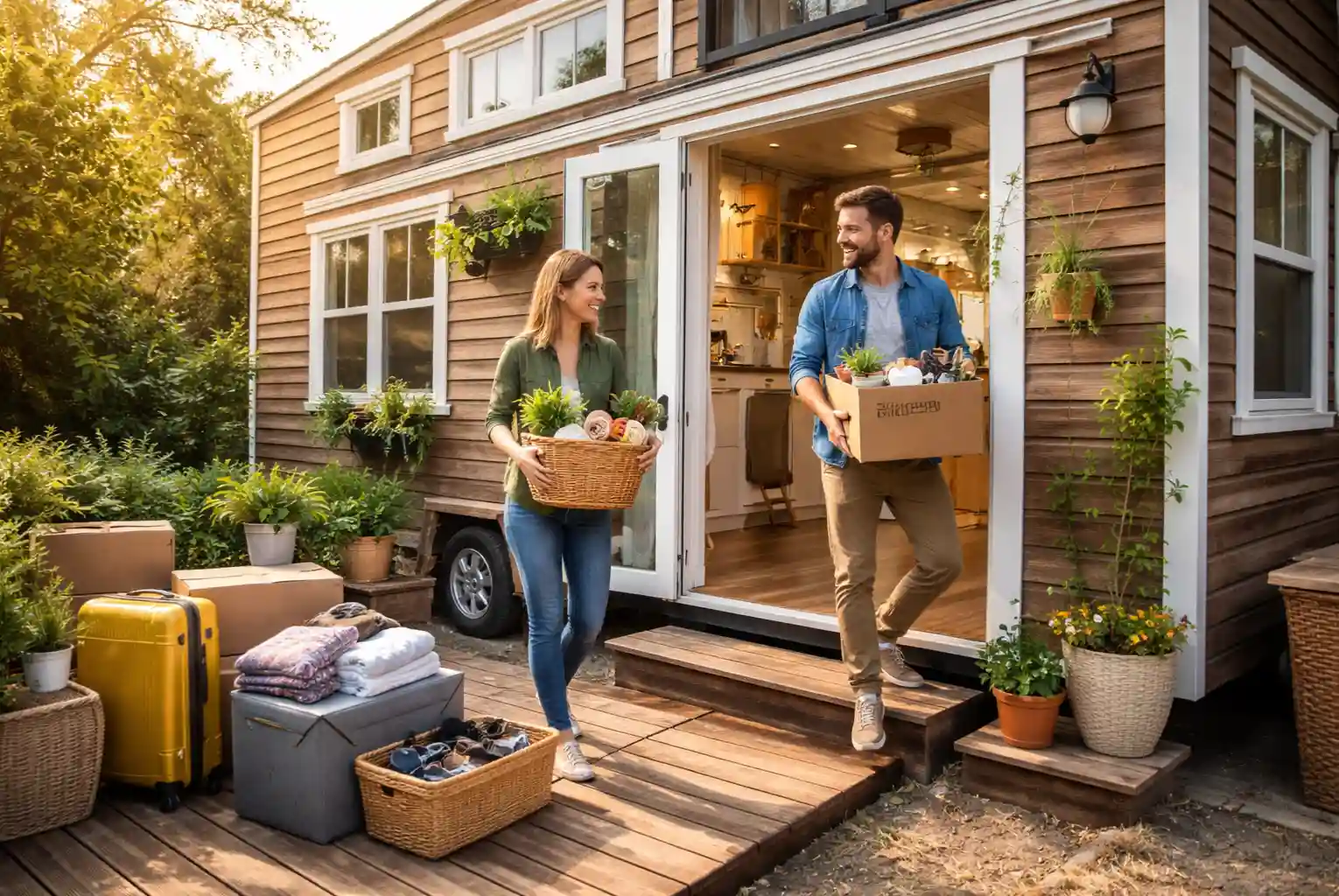
There is a wonderful feeling of freedom that comes from owning, spending, and consuming less while being selective about how, when, and where they spend their time and attention. For countless numbers of people, that freedom, in a very real and very tangible form, is a tiny home. Whether people want to escape the financial and emotional weight of a big mortgage, pursue a minimalist lifestyle, or simply start fresh, tiny home living offers countless rewards.
But we can be honest. The transition is rarely as simple as a dreamy story from Instagram. When you fit your existence into a couple of hundred square feet of space, it takes a decent amount of planning, a good amount of patience, and a paradigm shift about your relationship with that space. This guide is going to help you every single step of the way from downsizing things to organizing your place in a way that tiny living will be, dare we say it, comfortable.
What Does Living in a Tiny Home Mean?
A tiny home is usually considered to be a home that is less than 400 square feet. There are a variety of types of tiny homes, including, but not limited to, tiny homes on wheels, container homes, and modular homes.
Living in a tiny home is about way more than just square footage; it is a shift in your lifestyle. The shift includes giving up big rooms and big homes in exchange for intentional living; giving up big utility bills in exchange for financial freedom, etc. The good news is that once you embrace the mental shift, the physical part of the transition is much smoother.
Read Also: HOW DO DIGITAL NOMADS CHOOSE THE BEST CITIES TO LIVE AND WORK?
Benefits Of Moving into A Tiny House
This is how most tiny homeowners say most love most about tiny homes:
· Living costs are lower- Drops significantly are in mortgage payments, rent, utilities, and maintenance costs.
· Environmental footprint is smaller- Less energy is consumed by smaller homes.
· Living is more intentional- You only keep things that genuinely add value to your life.
· Mobility is greater- tiny homes on wheels allow you to keep your home and explore new locations.
· Less time is spent on cleaning and maintenance- You live more and manage less.
This is the motivation that becomes real when the overwhelming feelings start to set in.
How To Downsize Effectively
For most, this is the hardest part of the tiny home journey. It will be difficult to part with many things you have accumulated over the years. That said, this process can be easier with a couple of strategies, like starting the process early.
Start Earlier Than You Think You Need To
Do the downsizing process at least 2-3 months before you move. You will have significantly less to do at the new place, and there will be less clutter, so the organization will be much easier. This also means that you will have the time to avoid making decisions in a panic, to avoid moving things you don't want or need, and to avoid the regret of moving things you don't need but do want.
Use the "One Year Rule"
This rule can apply to clothing, tools, home gadgets, trinkets, and decorations. If you have not picked something up, used it, needed it, or done anything with it in the last year, you probably don't need anything like that in the future.
Sort Your Items
Here’s an easy system for tiny home downsizing:
· Keep- Items that are useful and will fit in the new home
· Donate - Items in good condition that other people could use
· Sell - Items that have enough value to be worth listing on marketplace apps or selling at a garage sale
· Discard - Items that are broken, expired, worn-out, or that have no reuse value
Go Digital
Paper clutter can quickly take over any space. To keep documents, receipts, or sentimental letters, scan them and find a good cloud storage provider. Don’t forget to scan any CDs or DVDs.
Be Honest About What Furniture to Bring
Most standard-sized furniture will not fit in a tiny home. Look at the new floor plan before making the move to decide what each piece will be. There are times when a large piece, such as a king-size bed, will be more of a burden than a blessing.
Design Your Tiny Home for Small Spaces
Once the downsizing is done, the next challenge is designing the tiny home to be open, functional, and stress-free. A smart organization is the brain of successful tiny living.
Look Up
In a small space, the walls are a good storage place. Use floating shelves, pegboards, and wall-mounted cabinets to keep the floor clear to give a more open feeling. This way, you can make the most of every inch.
Consider investing in space-saving furniture
When it comes to saving space in a tiny home, multi-functional furniture is a superb solution. Consider purchasing:
· Ottoman coffee tables with hidden compartments
· fold-down wall-mounted dining tables
· guest bed sofas
· benches with lift-up storage seats
· beds with built-in under-bed storage drawers
When it comes to furniture, having a single purpose for each piece is poor use of space. Aim for every piece of furniture to serve at least two purposes.
Use drawer dividers and bins consistently
To keep your space organized, consider being consistent with your system. Chaos can come from anywhere when it comes to small spaces, but being consistent can help avoid it. Use bins (including labelled bins), drawer dividers, and a uniform storage container to keep each category of object in a storage unit.
Keep your counters clear
This is especially true in a food preparation area built for small kitchens. Store smaller appliances in your cabinets and keep only what you use daily out. A counter free of objects will make your entire home feel larger and more breathable.
Use zones in your space
Even in a tiny home, you can have zones for sleeping, working, cooking, and relaxing. Subtle dividers can be any combination of a rug, a curtain, or an open shelving unit. This gives every corner order and purpose.
Read Also: WHY TRUCKS FOR MOVING ARE THE BACKBONE OF THE RELOCATION INDUSTRY
Common Tiny Home Living Challenges and Solutions
There are challenges to adjusting to a tiny home, and knowing them ahead of time adds to your success in overcoming them.
· Feeling Cramped: This will pass, usually it takes about a few weeks. Things like time outside, use of patios or porches, and having easy access to open windows help the feeling of space.
· Storage Running Out: Look at your stuff every few months or so. If you do a mini-declutter every season, it will prevent build-up and enable your tiny home storage to do its job.
· Having Guests: It's possible to host a small home gathering with the right furniture. Foldable chairs, convertible sofas and outdoor seating all create space for a gathering.
· Relationship Issues: If you're moving with a partner or family, the communication bar has been raised. It's vital to talk and set up shared routines and personal boundaries.
Packing a Tiny Home
The way you pack for this move is important, as the storage situation will change quite a bit. Being organized in your car with your stuff is a must.
· Each box should be labelled with its destination room and priority. Boxes needed immediately should be marked so that they are easily accessible.
· To avoid having to sift through boxes the first time, pack your first night bag with all the basic needs, cot, change of clothes, personal hygiene, electronic chargers, etc.
· Wrap all fragile items in your clothing, towels, and blankets. This will minimize the cost/need for bubble wrap and will also preserve space in your car.
· 420-Disassembling furniture means fewer damaged pieces in the move and it's easier to adjust to fit through doorways.
Read Also: HOW TO PLAN YOUR FINANCES BEFORE APPLYING FOR A HOME LOAN
Must Have Space-Saving Techniques for Tiny Homes
These space-saving techniques are ideal for tiny homeowners
· Use magnetic knife strips in the kitchen instead of a knife block and minimize the bulk in your kitchen.
· Over-the-door shoe organizers can also hold cleaning supplies and pantry items.
· Use a tension rod in your cabinet to create a divider to hold your cutting boards and baking sheets so you can stack them vertically instead of horizontally.
· Use hooks for coats and bags, and even use them to hang pots and pans.
· For your kitchen, use collapsible kitchenware, including a folding colander, nesting bowls, and stackable cups.
· Use a rolling cart that can be stored away.
These techniques create space in the home and can be used in multiple locations.
Last Time Tips for Moving into a Tiny Home
Here are some grounded, realistic tips for tiny home living.
· Before deciding to live in a tiny home, spend a weekend in one to find out what living in a tiny house really is.
· Before moving, research zoning laws because there are large variations in regulations regarding tiny homes on wheels and permanent tiny homes.
· Build your tiny home community through online forums, tiny house meetups, and join social media groups for tiny homeowners to access the best tips and support.
· Be easy on yourself during this transition. It is a substantial lifestyle change. Some days will feel like a big win, while other days will feel like a big loss. Both feelings are part of this process.
Conclusion
Moving into a tiny house is not just about reducing the space around you, but about positively transforming your life. With thoughtful consideration to your downsizing process, effective systems of organization, and the right mindset to embrace the changes, you will be surprised how hugely rewarding tiny living can be.
Trust the process, and don't be afraid to start small. Your tiny home is just around the corner, and the right adjustments will ensure it feels like home.
Our Blogs

CUSTOMS CLEARANCE PROCESS IN INDIA: DOCUMENTS, STEPS & COMMON CHALLENGES
Understand the customs clearance process in India with this comprehensive guide covering essential documents, step-by-step clearance procedures, baggage rules, Transfer of Residence benefits, and common customs charges. Learn about the requirements for importing household goods, pets, and vehicles, and discover how professional international relocation services can help you prepare for a smoother, safer, and more organised move to India.

BEST PLACES TO LIVE IN CANADA FOR INDIAN FAMILIES AND IMMIGRANTS
Planning to move from India to Canada in 2026? Discover the best places to live in Canada for Indian families and immigrants, including Toronto, Vancouver, Calgary, Edmonton, and Winnipeg. Explore affordable cities, housing and living costs, career opportunities, immigration requirements, healthcare facilities, and education options for children. This comprehensive guide also covers Canada Express Entry proof of funds, international shipping costs, customs documentation, and essential relocation tips to help Indian families plan a smooth, affordable, and stress-free move to Canada.

WHERE DO MOST INDIANS LIVE IN THE USA? TOP CITIES & STATES
Wondering where most Indians live in the USA? Explore the top states and cities, including California, Texas, New York, New Jersey, and Chicago. Discover popular Indian communities, population trends, and helpful tips for relocating from India to the USA.
 Post Feedback
 Gallery
 Awards & Media
 FAQ
FAQ CSR & Sustainability
.svg)