






INDIA'S 2026 DGFT PET IMPORT GUIDELINES: WHAT EXPATS MUST KNOW ABOUT QUARANTINE AND NOCS
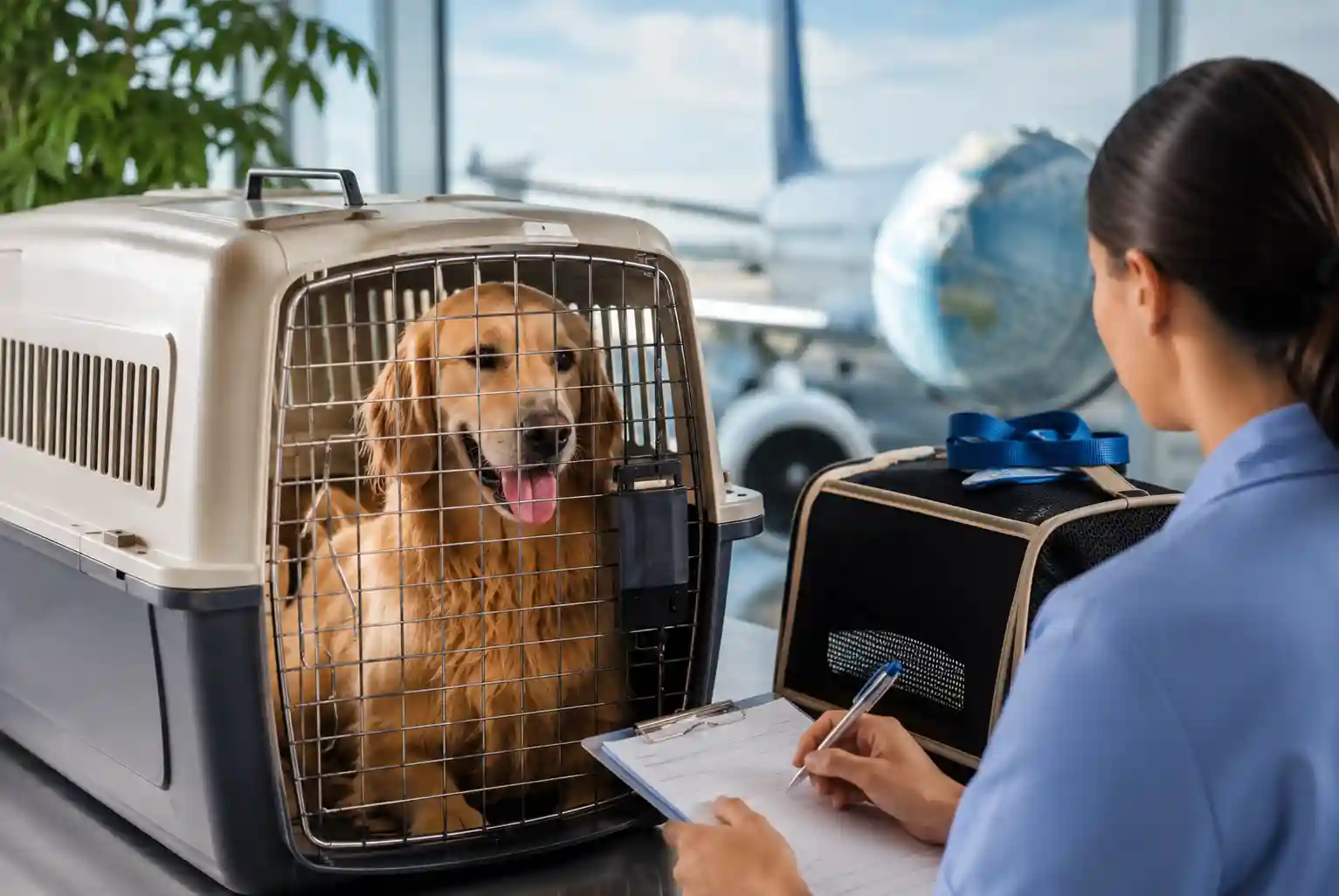
Relocating across international borders requires meticulous logistical planning, and the complexity multiplies exponentially when transporting live animals. For expatriates and returning residents, understanding India's 2026 DGFT Pet Import Guidelines: What Expats Must Know About Quarantine and NOCs is the most critical step to ensuring a safe, legal, and stress-free transition for their dogs and cats. The Indian government strictly regulates the entry of live animals to prevent the introduction of exotic diseases, making absolute compliance with the Directorate General of Foreign Trade (DGFT) and the Animal Quarantine and Certification Services (AQCS) non-negotiable. Navigating these pet import regulations in India involves securing advance authorizations, conforming to exact veterinary formats, and preparing for potential quarantine periods. This comprehensive report outlines the updated 2026 legal pathways, essential documentation, estimated costs, and expert strategies required for successful international pet transport.
Navigating India's 2026 DGFT Pet Import Guidelines: What Expats Must Know About Quarantine and NOCs
The foundational rule of pet relocation to India is that open-ended imports are strictly prohibited. Every dog or cat entering the country must qualify under one of three distinct legal pathways defined by the government. Establishing the correct pathway early determines whether the owner requires a specialized DGFT restricted import license or simply an airline ticket and an AQCS clearance.
The Three Official Import Pathways
|
Import Pathway |
Eligibility Criteria |
Key Documentary Requirement |
|
Transfer of Residence (Baggage Rule) |
Owners relocating permanently after a continuous overseas stay of at least two years. Up to two pets allowed. |
Proof of two years abroad (e.g., cancelled visa, employment termination, foreign residence permit). |
|
Re-Import |
Pets that previously lived in India and are now returning. |
The original AQCS veterinary export health certificate issued when the pet left India. |
|
Short Stay & Commercial (DGFT License) |
Owners residing abroad for less than two years, temporary visitors, or those importing more than two pets. |
Valid DGFT restricted import license obtained before applying for the AQCS NOC. |
Applying for the DGFT Restricted Import License
If an expatriate does not meet the strict two-year overseas residency requirement of the Customs baggage rules for pets, they must apply for import authorization. This involves submitting form ANF-2M through the online DGFT portal. Pet owners are advised to initiate this process at least two months before their travel dates. The application requires an Importer Exporter Code (IEC) or the use of a permanent IEC designated for personal imports, alongside a minimum application fee of Rs. 500.
Essential Veterinary Requirements for Moving Pets to India
Gathering the correct medical paperwork is the most critical phase of moving pets to India. Indian authorities maintain stringent format requirements for all veterinary documents, and local clinic templates are routinely rejected.
Mandatory Medical Documentation
- ISO-Compliant Microchip: Every pet requires a 15-digit ISO 11784/11785-compliant microchip. Crucially, the microchip must be implanted before the primary rabies vaccination is administered.
- Rabies Vaccination Requirements for India: Pets must possess a current rabies vaccination that is more than 30 days old but administered within 12 months prior to the date of travel. Notably, India does not require a rabies titer (serology) test for entry from most countries.
- Official Government Health Certificates: Dogs require an official health certificate formatted as the Annexure 1.1.1 health certificate, while cats require Annexure 2.1.1. These certificates must be formally endorsed by a competent government veterinary authority in the exporting country, such as the USDA in the United States or the CFIA in Canada.
Species-Specific Feline Requirements
While dogs and cats share foundational requirements, cats face an additional layer of medical scrutiny. The health certificate (Annexure 2.1.1) must explicitly state that the cat was subjected to a 7-day influenza examination, confirming no clinical signs of influenza-like illness were detected within seven days prior to shipment.
Step-by-Step Guide to Securing the AQCS Advance NOC
Before any pet can board an aircraft bound for India, the owner must secure an AQCS Advance NOC (No Objection Certificate). Airlines will unequivocally deny boarding to any animal lacking this mandatory pre-travel approval.
- Compile Documentation: Gather the DGFT license (if applicable), government-endorsed Annexure health certificates, microchip records, vaccination books, owner's passport, flight tickets, and proof of overseas residency.
- Submit the Application: Applications must be submitted online, via email, or in person to the specific AQCS office at the intended port of entry at least seven days before embarkation.
- Port Designation: The import of pet animals is restricted to designated airports equipped with AQCS stations: Delhi, Mumbai, Bengaluru, Chennai, Hyderabad, Kolkata, and recently, the Cochin International Airport.
- Receive Approval: Complete applications are typically processed and issued by the AQCS within one working day.
Timelines and Estimated Costs for International Pet Transport
Budgeting for international pet transport requires accounting for government fees, veterinary costs, and airline cargo charges. While official Indian government processing fees remain relatively low, logistical costs can accumulate rapidly.
|
Expense Category |
Estimated Cost Range |
Details |
|
Microchip Implantation |
Rs. 1,000 – Rs. 2,000 |
Must be ISO 11784/11785-compliant. |
|
DGFT License Application |
Min. Rs. 500 |
Paid via the DGFT online portal for ANF-2M applications. |
|
AQCS & Customs Fees |
Rs. 2,500 – Rs. 5,000 |
Modest administrative processing fees. |
|
Veterinary & Government Endorsement |
Rs. 2,000 – Rs. 5,000+ |
Origin-country vet exams and official endorsements. |
|
Airline Cabin/Cargo Fees |
$200 – $2,500+ |
Varies heavily based on the airline, pet size, and cabin vs. cargo routing. |
Navigating Pet Quarantine in India
A primary concern for expatriates is the prospect of pet quarantine in India. Under standard 2026 regulations, pets arriving as passenger baggage are generally subject to a 15-day quarantine period upon arrival.
However, if the animal arrives in excellent health, with pristine paperwork and no clinical signs of infectious diseases, AQCS authorities frequently permit a 15-day home quarantine under the owner's strict supervision. Conversely, if documents are incomplete, or the animal exhibits signs of illness upon physical inspection at the airport, it will be held at a government quarantine station at the owner's expense for further testing. Temporary visitors bringing pets for shows or therapy may be exempt from the 15-day rule if specific conditions are met and the pet departs with the owner.
Common Mistakes to Avoid When Relocating Pets
Even minor administrative discrepancies can result in severe customs delays or deportation. Expatriates must proactively avoid the following common pitfalls:
- Booking Flights Prematurely: Flight arrangements should never be finalized until the AQCS Advance NOC is officially confirmed and in hand.
- Incorrect Health Certificate Formats: Submitting standard local clinic templates instead of the government-mandated Annexure 1.1.1 health certificate or Annexure 2.1.1 will trigger an automatic rejection.
- Microchip Timing Errors: If the vaccination record shows a date prior to the microchip implantation date, Indian authorities will invalidate the vaccination entirely.
- Overstaying the Feline Influenza Window: For cats, completing the influenza examination earlier than the strict seven-day pre-flight window renders the health certificate void.
Why Professional Relocation Services Can Help
Managing international logistics, dealing with foreign government portals, and aligning exact veterinary appointments with international flight schedules can easily overwhelm even the most organized pet owners. Engaging professional pet relocation experts mitigates these significant risks.
Specialized moving consultants possess direct experience navigating the complexities of the DGFT and AQCS frameworks. They assist by seamlessly securing the import authorization for restricted items if the two-year residency requirement is not met, coordinating with government-accredited veterinarians in the origin country to ensure flawless paperwork, and acting as local representatives to file the AQCS Advance NOC. Furthermore, professional relocation services manage complex customs clearances upon arrival, drastically reducing the likelihood of extended facility quarantines and ensuring the pet transitions smoothly to home quarantine.
Frequently Asked Questions (FAQs)
1. Does India require a rabies titer test for importing dogs and cats?
No, India does not mandate a rabies titer (serology) test for pets entering the country from most origin locations. A standard, up-to-date rabies vaccination administered between 30 days and 12 months prior to travel is legally sufficient.
2. How many pets can be imported under the Transfer of Residence rules?
Expatriates and returning Indian nationals who have lived abroad continuously for at least two years can import up to two pets (dogs or cats) as passenger baggage without needing to secure a DGFT license.
3. What happens if an expat has lived abroad for less than two years?
If the owner does not meet the strict two-year continuous overseas stay requirement, the pet cannot be imported under standard baggage rules. The owner must apply for a DGFT restricted import license at least two months prior to applying for the AQCS NOC.
4. When should the AQCS Advance NOC be applied for?
The application for the AQCS Advance NOC must be submitted to the designated regional quarantine office at least seven days prior to the pet's embarkation date to ensure airline boarding is not denied.
5. What is the mandatory quarantine period for pets arriving in India?
Pets are generally subject to a 15-day quarantine period. If the animal passes the arrival health inspection and all paperwork is flawless, this is typically permitted as a home quarantine. Sick pets or those with missing documents will be held at a government facility.
6. What is the specific health certificate required for cats?
Cats require an official health certificate formatted as Annexure 2.1.1. Additionally, they must undergo a species-specific clinical examination confirming they are free from influenza-like illnesses no more than seven days before travel.
7. Can pets arrive at any international airport in India?
No, the import of pets is strictly restricted to designated airports equipped with an AQCS station. These are located in Delhi, Mumbai, Bengaluru, Chennai, Hyderabad, Kolkata, and Cochin. The pet must arrive precisely at the port designated on their NOC.
Conclusion
Successfully executing India's 2026 DGFT Pet Import Guidelines: What Expats Must Know About Quarantine and NOCs requires meticulous timeline management, precise veterinary formatting, and proactive administrative filings. By confirming the correct import pathway, securing an ISO-compliant microchip, utilizing the mandated Annexure health certificates, and applying for the AQCS Advance NOC well ahead of departure, expatriates can ensure their pets arrive safely and legally. While the regulatory landscape is undeniably stringent, strictly adhering to these established protocols—or enlisting the expertise of professional pet relocation experts- guarantees a streamlined, stress-free reunion with beloved companions on Indian soil.
Our Blogs

WHERE DO MOST INDIANS LIVE IN THE USA? TOP CITIES & STATES
Wondering where most Indians live in the USA? Explore the top states and cities, including California, Texas, New York, New Jersey, and Chicago. Discover popular Indian communities, population trends, and helpful tips for relocating from India to the USA.

MOVING TO THAILAND FROM INDIA: A COMPLETE RELOCATION GUIDE
Planning to move to Thailand from India? Explore visa requirements, essential documents, customs regulations, household shipping options, and estimated relocation costs. Discover practical moving tips and learn how professional international movers like PM Relocations can help you enjoy a smooth, safe, and stress-free relocation to Thailand.

BEST COUNTRIES FOR INDIANS TO SETTLE ABROAD: A PRACTICAL COMPARISON
Planning to settle abroad? Discover the best countries for Indians to settle abroad, including Canada, Australia, Germany, the UK, New Zealand, the USA, and UAE. Explore job opportunities, permanent residency options, visa requirements, living costs, and quality of life in each country. This practical guide helps Indian professionals, students, and families compare popular destinations, understand international relocation costs, and choose the right country for a better future. Get useful tips on moving abroad from India, preparing important documents, and planning a safe, smooth, and stress-free international move.
 Post Feedback
 Gallery
 Awards & Media
 FAQ
FAQ CSR & Sustainability
.svg)